


The Internet of Things (IoT) is revolutionizing how we interact with the world, connecting everyday objects and devices to the internet. But behind the smart refrigerators, wearable tech, and industrial sensors lies the unsung hero: the operating system (OS). These specialized OSes are meticulously crafted to manage the unique demands of IoT devices, which often operate with limited resources and require robust security and seamless connectivity. This article dives deep into the 14 best operating systems for IoT, equipping you with the knowledge to choose the right OS for your next connected project.
Zephyr
Zephyr is a small, scalable, and open-source real-time operating system (RTOS) designed for connected devices. Its modular design allows developers to tailor the OS for specific needs, making it ideal for resource-constrained devices. Zephyr boasts impressive features, including support for multiple hardware architectures, Bluetooth, LoRa, NFC, and a small memory footprint with low power consumption. Its robust security features and networking capabilities make it a top choice for a wide range of IoT applications, from wearables to industrial sensors.

Ubuntu Core
A hardened and minimal version of the popular Ubuntu Linux distribution, Ubuntu Core is built specifically for large container deployments and IoT devices. Developed by Canonical, it shares the same core components as Ubuntu but is optimized for smaller footprints, making it perfect for robots, gateways, and digital signage. Ubuntu Core emphasizes security with immutable packages and persistent digital signatures. Its enterprise-ready nature and focus on security make it a reliable choice for critical IoT deployments.

RIOT OS
RIOT is a free, open-source OS specifically built for IoT devices with a strong emphasis on open standards. It aims to provide secure, durable, and privacy-friendly connections. RIOT OS excels in resource efficiency, requiring minimal RAM and ROM. It offers full support for C and C++, multi-threading, and modularity, making it a versatile option for developers. RIOT’s open-source nature encourages community contributions and adaptability, making it an attractive option for a wide range of IoT projects.

FreeRTOS
FreeRTOS is a widely used, open-source RTOS for microcontrollers. This lightweight kernel provides essential functionality for task management, scheduling, and synchronization, and it’s easy to use and integrate. Its small memory footprint and low power consumption make it ideal for battery-powered devices. FreeRTOS’s widespread adoption and active community ensure ample support and readily available resources for developers.

Mbed OS
Developed by Arm, a leader in the microprocessor industry, Mbed OS is an open-source RTOS designed for embedded systems and IoT devices. It streamlines development, offering a range of features for creating efficient, secure, and scalable products. Its portability across a wide range of Arm Cortex-M microcontrollers gives developers flexibility in hardware selection. Mbed OS is known for its lightweight design, strong security features, and active community.

Fuchsia OS
Fuchsia is an open-source, capability-based, real-time OS developed by Google for IoT devices. Unlike Android and Chrome OS, which are based on the Linux kernel, Fuchsia utilizes the Zircon kernel. It’s designed to be modular and adaptable, with the potential to run on a variety of devices, including smartphones and tablets. Fuchsia represents Google’s vision for the future of operating systems, and it is worth watching closely.

Contiki-NG
Contiki-NG is an open-source OS designed for resource-constrained, networked IoT devices, and it’s the successor to the original Contiki OS. It offers enhanced features, stability, and performance, making it a great choice for memory-limited devices. Contiki-NG includes built-in IP support and a wide range of communication protocols.

TinyOS
TinyOS is a free and open-source OS designed for low-power wireless devices, making it perfect for sensor networks and other resource-constrained applications. Its component-based architecture promotes modularity and reusability, while its event-driven programming model simplifies development. TinyOS’s focus on network awareness makes it ideal for applications where devices need to communicate efficiently with each other.

BalenaOS
BalenaOS is a Linux-based OS optimized for running Docker containers on embedded devices. It’s built on the Yocto Project and simplifies the deployment and management of containerized applications. Its focus on security and ease of use makes it a great choice for projects that require containerization.

MicroPython
MicroPython is a streamlined and optimized implementation of Python 3, designed for microcontrollers and resource-constrained environments. It provides a simplified subset of the Python standard library. Its efficiency and portability make it an excellent choice for developing embedded applications, including IoT devices, robotics projects, and educational tools.

Windows for IoT
Windows for IoT is Microsoft’s operating system platform for IoT devices, offering a familiar Windows environment for developers to create smart, interconnected solutions. It’s divided into two main editions: Windows 10 IoT Core and Windows 10 IoT Enterprise. It integrates with Azure IoT Suite, Microsoft’s cloud solution for IoT, providing a comprehensive end-to-end solution.

OpenWrt
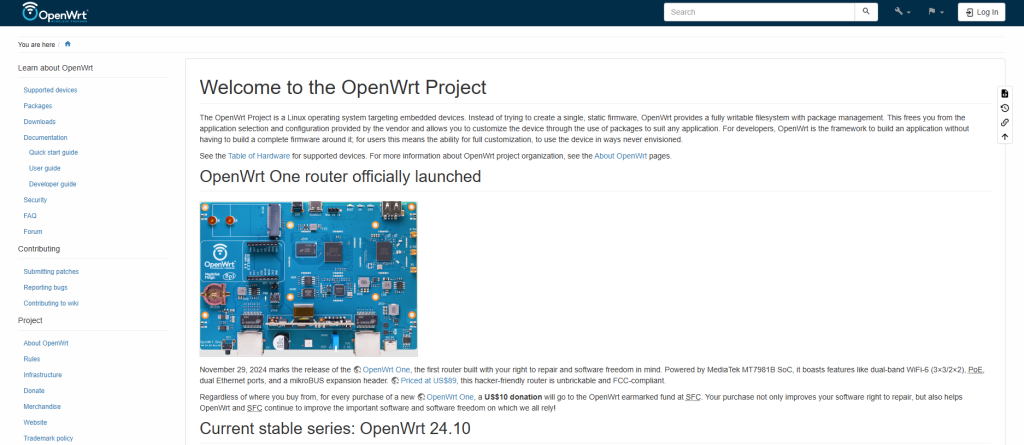
OpenWrt is an open-source firmware project, primarily for embedded devices like routers. Unlike standard firmware, OpenWrt allows extensive customization and functionality. Its modular design and package management system empower users to personalize their devices. OpenWrt is ideal for those who need to configure their devices in unique ways.
Embedded Linux
Embedded Linux refers to a group of Linux-based operating systems specifically for embedded devices. Built on a modular architecture with a secure foundation, these systems are designed to be lightweight, efficient, and cloud-native.
Fedora IoT
Fedora IoT is a variant of the Fedora operating system tailored for IoT devices. Fedora IoT offers a robust, secure, and open-source platform optimized for edge computing. With its modular design, Fedora IoT simplifies device management.
Conclusion:
Selecting the best IoT OS depends on the specific project requirements. Consider factors such as resource constraints, security needs, connectivity protocols, and scalability when making your decision. The landscape of IoT operating systems is constantly evolving, with new technologies and advancements emerging. The operating systems listed above offer diverse options, from lightweight RTOS solutions to robust, feature-rich platforms, empowering developers to build the future of connected devices.
And if you'd like to go a step further in supporting us, you can treat us to a virtual coffee ☕️. Thank you for your support ❤️!

We do not support or promote any form of piracy, copyright infringement, or illegal use of software, video content, or digital resources.
Any mention of third-party sites, tools, or platforms is purely for informational purposes. It is the responsibility of each reader to comply with the laws in their country, as well as the terms of use of the services mentioned.
We strongly encourage the use of legal, open-source, or official solutions in a responsible manner.
Comments