

Artificial intelligence (AI) is revolutionizing business operations across the United States—from streamlining logistics to enabling smarter decision-making. While AI elevates efficiency and creates new market opportunities, especially for enterprises, it comes with a significant, often invisible, environmental price. As U.S. data centers already account for over 4% of the nation’s electricity consumption, the AI boom threatens to intensify energy use and carbon emissions. The core challenge remains: how can U.S. businesses harness AI’s power without deepening its ecological toll?

AI and the Environment: Balancing Risks and Opportunities
As AI applications proliferate, their resource demands grow—particularly electricity, water, and rare materials. Yet, AI also holds promising solutions to environmental problems when applied thoughtfully.
AI as an Environmental Ally
- Smart urban waste management: Sensor-equipped systems can reduce collection truck routes—cutting fuel use and emissions.
- Water leak detection: AI platforms like those using large datasets to pinpoint leaks early help conserve precious resources.
AI’s Expanding Environmental Footprint
- Data centers now consume over 4% of U.S. electricity, contributing to around 105 million metric tons of CO₂-equivalent—about 2.2% of national emissions—with these facilities exhibiting 48% higher carbon intensity than the national average
- Projections suggest data center electricity consumption could rise to 8–11% by 2030 and up to 15% by 2035.
- Some forecasts estimate that without regulation, U.S. AI data centers may emit 1 billion tons of CO₂ over the next decade, surpassing annual emissions from Japan .
Why AI Demands So Much Energy
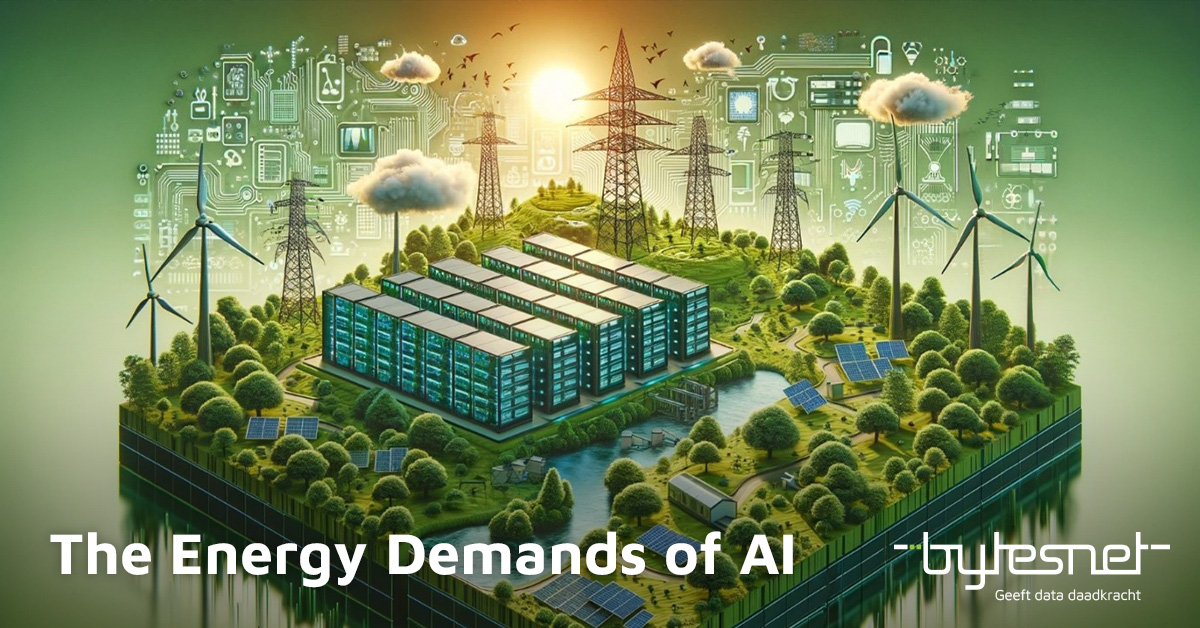
Compute-Heavy AI Models
Advanced AI systems—like large-scale language models—require nonstop GPU-powered computing, driving up energy needs.
Data Center Energy & Water Use
- Big Tech’s expanding AI infrastructure is straining grids and triggering health costs estimated at $5.7–$9.2 billion annually, including premature deaths and asthma episodes.
- Public health consequences from data center-related air pollution have already cost over $5.4 billion, with impacts like increased cancer and asthma among nearby populations.
Key Questions U.S. Businesses Should Ask Before Deploying AI
- Necessity: Is AI truly essential, or could more sustainable alternatives suffice?
- Vendor Transparency: Do AI providers disclose environmental metrics—like energy use, emissions, and cooling water usage?
- Efficiency of Existing Infrastructure: Can current systems be optimized before investing in new AI-specific hardware?
Strategies for Greener AI in the U.S.
Improve Algorithm and Hardware Efficiency
- Employ TinyML, data pruning, and quantization to reduce AI model size and energy usage.
- Favor more efficient chips and hardware designs tailored to AI workloads.
Operate Cleaner Data Centers
- Implement advanced cooling techniques (e.g., liquid immersion) to reduce energy and water consumption.
- Participate in demand-response programs—like Google has with U.S. utilities—to reduce grid strain during peak demand.
- Encourage real-time energy management to harmonize AI workloads with renewable grid supply.
Corporate Responsibility and Transparency
- Choose cloud providers powered by renewable energy and commit to transparent environmental reporting.
- Support energy innovations, such as long-duration storage or clean power investments, to offset AI’s increasing demand.
What the Tech Giants Are Saying About AI and Sustainability
While many U.S. companies are racing to deploy AI, the tech giants leading this boom are also beginning to acknowledge—and address—its environmental footprint. Here’s what some of them are saying:
Microsoft
Satya Nadella, Microsoft’s CEO, emphasizes the urgency of combining technology with sustainability:
“Climate change is the defining issue of our generation, and addressing it requires swift, collective action and technological innovation. … Technology is a powerful lever to help us avoid the most severe impacts of climate change. That’s why we’re accelerating our investment in more efficient datacenters, clean energy, and green software practices.”
Brad Smith, Microsoft’s Vice Chair and President, highlights the broader impact:
“Minimizing the sustainability impact of AI operations requires more than minimizing resource use in data center operations; it also requires supporting the communities where data centers are located and expanding access to zero-carbon electricity.”
Amazon / AWS
Kara Hurst, Amazon’s VP of Worldwide Sustainability, sees AI as a critical climate tool:
“AI and ML can help us meet our climate goals at the speed, scale, and urgency our planet requires. AI is becoming an increasingly important part of our work to build a more sustainable business.”
Chris Walker, Director of Sustainability at AWS, underlines operational efficiency:
“AWS’s holistic approach to efficiency helps to minimize both energy and water consumption in our data center operations… As we work toward Amazon’s net-zero carbon by 2040, we will continuously innovate to increase energy efficiency and build a brighter future for our planet.”
Google
Google is pushing for 24/7 carbon-free operations:
“Our data centers are among the most efficient in the world… We’ve set a climate moonshot to run on carbon-free energy, 24 hours a day, 7 days a week, 365 days a year – by 2030.”
On AI efficiency, Google notes its latest TPU chips are cutting energy waste dramatically:
“Trillium, our sixth-generation TPU, is over 67% more energy-efficient than TPU v5e… combined best practices can reduce the energy required for AI model training by up to 100× and emissions by up to 1 000×.”
These statements show that major U.S. tech companies are not only aware of AI’s environmental challenges but are actively working on solutions—from more efficient chips and cooling systems to renewable energy commitments. However, the gap between corporate pledges and actual emissions reductions remains significant, making transparency and accountability essential.
AI as a Catalyst for Sustainability
If designed with sustainability in mind, AI can help the U.S. fight climate change:
- Smart Grid Management: IBM’s AI tools optimize electricity flow from renewable sources.
- Precision Agriculture: Ceres Imaging uses AI-powered aerial imagery to reduce water and fertilizer waste in farming.
- Wildlife Protection: Conservation AI uses camera traps and machine learning to monitor endangered species in U.S. reserves.
Conclusion:
Artificial intelligence offers unmatched benefits for U.S. businesses. Yet the environmental cost—rising electricity consumption, increased carbon emissions, and public health risks—cannot be ignored. By deploying AI responsibly, optimizing infrastructure, and aligning with clean-energy solutions, U.S. businesses can ensure that the AI revolution contributes to sustainability rather than undermines it. Collaboration between corporations, researchers, and policymakers will be essential to making AI the solution, not the problem.
Sources.
And if you'd like to go a step further in supporting us, you can treat us to a virtual coffee ☕️. Thank you for your support ❤️!

We do not support or promote any form of piracy, copyright infringement, or illegal use of software, video content, or digital resources.
Any mention of third-party sites, tools, or platforms is purely for informational purposes. It is the responsibility of each reader to comply with the laws in their country, as well as the terms of use of the services mentioned.
We strongly encourage the use of legal, open-source, or official solutions in a responsible manner.
Comments