

Back in 2008, Google introduced Chrome to the world, and in doing so, quietly launched one of the most influential open-source projects in tech history — the Chromium Project. What started as a lightweight, experimental browser has now become the backbone of nearly every major web browser in 2025. From Microsoft Edge and Opera to Brave and Vivaldi, Chromium powers the way billions of people access the web each day.
Today, as artificial intelligence, privacy, and competition shape the digital landscape, Chromium’s role has never been more critical. This article explores the evolution of Chromium, how it differs from Chrome, the rise of Edge, the state of competing browsers, how AI is being integrated, and what the future may hold for the internet’s most important open-source foundation.

What Exactly Is Chromium, and How Does It Differ from Chrome?
The Chromium Project is an open-source browser framework launched by Google in 2008. Designed as a “safer, faster, and more stable” browsing experience, Chromium is free for anyone to use, modify, and build upon.
The key distinction lies in features:
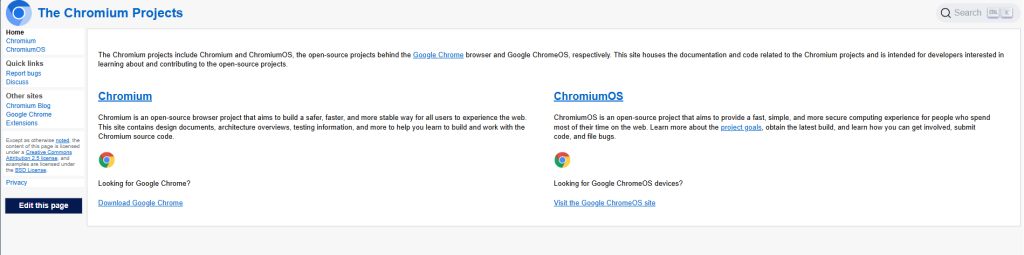
- Chromium: Minimal, open-source, developer-friendly, without proprietary integrations.
- Google Chrome: Built on Chromium, but adds Google services such as automatic updates, Widevine DRM, account syncing, proprietary video/audio codecs, and deep integration with Google’s ecosystem.
This flexibility allows companies like Microsoft, Brave, Opera, and Vivaldi to craft their own browsers with unique features while maintaining compatibility with the modern web — all thanks to Chromium’s solid foundation.
Microsoft Edge and Chromium
When Microsoft shifted Edge to Chromium in early 2020, the decision was controversial. Critics feared that moving away from Microsoft’s own rendering engine (EdgeHTML) would hand too much power to Google.
Fast-forward to 2025, and that gamble has paid off:
- Edge is now the world’s #2 desktop browser, trailing only Chrome and surpassing both Safari and Firefox.
- Microsoft has differentiated Edge with features like AI-powered Copilot, enhanced privacy defaults, and unique vertical tab navigation.
- As the default browser on Windows 11, Edge has firmly secured its place in the Microsoft ecosystem.
While privacy advocates still flock to Brave or Firefox, Edge represents the strongest competition Chrome has faced in over a decade.
Chrome: Still the Market Leader, But Under Pressure

Despite rising competition, Google Chrome continues to dominate with more than 60% global market share. However, its once-unchallenged position is beginning to show cracks:
- End of third-party cookies: After years of delays, Google is now set to fully phase them out by late 2025.
- AI-driven browsing: Chrome integrates tools like Search Generative Experience (SGE) and AI-powered writing and translation assistants.
- Regulatory scrutiny: Ongoing antitrust investigations in the U.S. and EU are challenging Google’s dominance.
Chrome remains the world’s default choice, but for the first time in 15 years, it faces genuine pressure from rivals.
Other Chromium-Based Browsers
Chromium’s strength lies in its adaptability. Beyond Chrome and Edge, several browsers have thrived by targeting specific audiences:
- Opera – Popular among power users, with AI integrations, built-in VPN, and messaging apps (WhatsApp, Telegram) in the sidebar.
- Brave – The privacy-first browser, offering ad blocking, tracker prevention, and a built-in crypto wallet. Brave surpassed 70 million active users in 2025.
- Vivaldi – A favorite for tech-savvy users who love deep customization, tab tiling, and productivity-focused tools.
- Arc (by The Browser Company) – Not purely Chromium, but blends its rendering engine with a radically redesigned interface, gaining traction among designers and creatives.
Each of these browsers leverages Chromium’s stability while appealing to users with unique features, whether privacy, productivity, or design.
Chromium and Artificial Intelligence
Artificial intelligence is reshaping how we interact with browsers, and Chromium is at the center of this transformation. Because it serves as the foundation for Chrome, Edge, Opera, and others, AI innovations built into Chromium-based browsers are rapidly becoming industry standards.
Here’s how AI is influencing the Chromium ecosystem in 2025:
- AI-Powered Assistance: Chrome integrates AI tools like SGE, smart writing aids, and real-time translation. Edge leverages Copilot, offering contextual help, summaries, and task automation.
- Smarter Security: Chromium browsers use AI-driven phishing detection and malware protection to block evolving threats more effectively.
- Performance Optimization: AI helps manage background processes, tab memory usage, and even predicts user browsing behavior for faster load times.
- Accessibility Enhancements: AI features improve speech recognition, screen reading, and translation, making the web more inclusive.
In short, Chromium is becoming not just a web engine but a platform for AI-powered browsing, setting the stage for a new era of personalized and intelligent internet experiences.
The Future of Chromium: Innovation or Monoculture?
In 2025, Chromium is more than just a browser project — it’s the foundation of the modern internet. Developers benefit from standardized web compatibility, while users enjoy stable, secure browsing across platforms.
Yet, there are growing concerns about monoculture. With so many browsers depending on Chromium, critics argue the web risks becoming too dependent on Google’s influence. Mozilla Firefox, powered by its independent Gecko engine, remains a vital alternative — even if its market share hovers below 7%.
Looking ahead, Chromium will almost certainly continue powering the majority of the world’s browsing experiences. The challenge for the next decade will be ensuring diversity, innovation, and competition in a web increasingly dominated by a single open-source foundation.
Conclusion
From its humble beginnings in 2008 to its dominance in 2025, the Chromium Project has reshaped the internet. It powers Chrome, Edge, Brave, Opera, and Vivaldi, while also driving the integration of AI tools that redefine browsing.
As regulators, developers, and users debate issues like privacy and competition, one fact remains: Chromium is not just a piece of open-source software — it’s the backbone of the modern web. The future of browsing will depend on how well the industry balances AI innovation, user choice, and true competition in a Chromium-driven world.
And if you'd like to go a step further in supporting us, you can treat us to a virtual coffee ☕️. Thank you for your support ❤️!

We do not support or promote any form of piracy, copyright infringement, or illegal use of software, video content, or digital resources.
Any mention of third-party sites, tools, or platforms is purely for informational purposes. It is the responsibility of each reader to comply with the laws in their country, as well as the terms of use of the services mentioned.
We strongly encourage the use of legal, open-source, or official solutions in a responsible manner.
Comments