
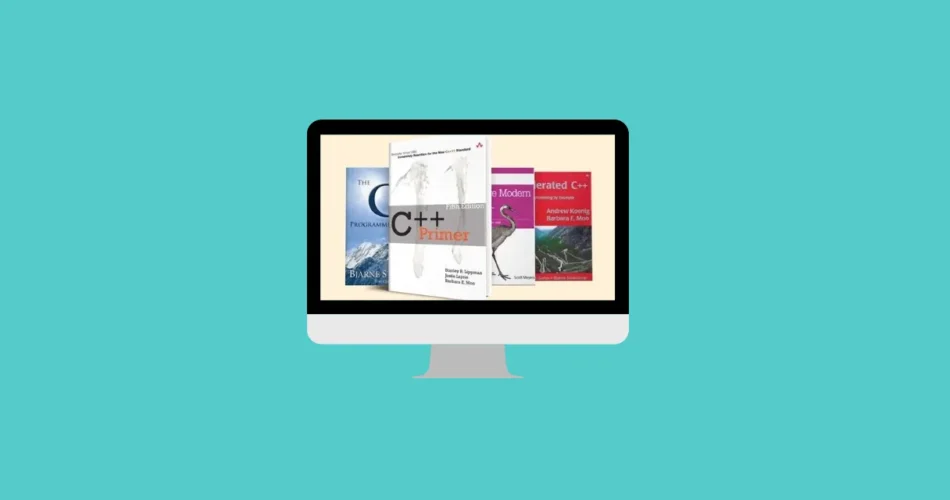
C and C++ remain two of the most important languages in systems programming. They sit underneath operating systems, databases, browsers, game engines, embedded devices, networking software, and many of the runtimes used by higher-level languages.
That makes learning C or C++ a long-term investment. The languages have evolved significantly over the years, but the fundamentals—memory, pointers, data structures, compilation, performance, and low-level programming—remain highly valuable.
One of the best ways to learn either language is still to work through a good book from beginning to end rather than jumping between disconnected tutorials.
This guide covers the best C and C++ programming books to read in 2026, from beginner-friendly introductions to advanced references and books covering modern standards such as C23, C++20, and C++23.
We’ve separated the books by experience level and explained who each one is actually suitable for, what standard it covers, and where its limitations are.
Note: Book prices fluctuate by seller, edition, format, and availability. Treat prices mentioned in this guide as approximate rather than permanent prices.
Best C and C++ Books at a Glance
If you don’t want to read the entire list, these are some of the strongest choices depending on your goal:
- Best classic C book: The C Programming Language by Brian W. Kernighan and Dennis M. Ritchie
- Best C book for beginners: Head First C by David Griffiths and Dawn Griffiths
- Best modern C book: Effective C, 2nd Edition by Robert C. Seacord
- Best C23 book for intermediate programmers: Modern C, 3rd Edition by Jens Gustedt
- Best comprehensive C textbook: C Programming: A Modern Approach by K. N. King
- Best C++ book for beginners: Programming: Principles and Practice Using C++, 3rd Edition by Bjarne Stroustrup
- Best C++23 beginner book: Beginning C++23 by Ivor Horton and Peter Van Weert
- Best classic C++ tutorial: C++ Primer, 5th Edition
- Best modern C++ overview: A Tour of C++, 3rd Edition by Bjarne Stroustrup
- Best C++20 reference: C++20: The Complete Guide by Nicolai M. Josuttis
- Best C++11/14 practices book: Effective Modern C++ by Scott Meyers
- Best advanced C++ reference: The C++ Programming Language, 4th Edition by Bjarne Stroustrup
How We Chose These C and C++ Books
A famous programming book isn’t automatically the right book for everyone.
A 1,000-page C++ reference can be extremely useful to an experienced developer but overwhelming for someone writing their first program. Likewise, a beginner-oriented book may be too slow for somebody who already understands programming.
We considered four main factors:
Teaching quality
Does the book actually teach its target audience effectively, with explanations, examples, exercises, or practical guidance?
Modernity
Which version of C or C++ does the book cover?
This matters particularly in 2026 because C23 and C++23 contain features that aren’t covered by many older classics.
Depth
Does the book provide enough material to remain useful after the reader understands the basics?
Long-term usefulness
Some older books remain valuable because they explain fundamental concepts exceptionally well. Others are included primarily for historical or reference value and should not be mistaken for modern-standard guides.
C and C++ Programming Books Compared
| Book | Language | Best For | Edition | Standard | Approx. Length |
|---|---|---|---|---|---|
| The C Programming Language | C | Intermediate | 2nd | ANSI C | 272 pages |
| Head First C | C | Beginners | 1st | C99-era | 600+ pages |
| Let Us C | C | Beginners | 19th | Modernized C | 500+ pages |
| Programming in ANSI C | C | Students | 8th | ANSI C | 596 pages |
| C: The Complete Reference | C | Reference | 4th | Older C | 800 pages |
| C Programming: A Modern Approach | C | Beginner → Advanced | 2nd | C99 | 832 pages |
| Effective C | C | Professional C | 2nd | C23 | 312 pages |
| Modern C | C | Intermediate | 3rd | C23 | 552 pages |
| The C++ Programming Language | C++ | Advanced | 4th | C++11 | 1,300+ pages |
| C++ Primer | C++ | Beginner → Intermediate | 5th | C++11 | 976 pages |
| Programming: Principles and Practice Using C++ | C++ | Beginners | 3rd | C++20 + selected C++23 | 656 pages |
| Effective Modern C++ | C++ | Intermediate → Advanced | 1st | C++11/C++14 | 336 pages |
| A Tour of C++ | C++ | Intermediate | 3rd | C++20 + selected C++23 | 320 pages |
| Beginning C++23 | C++ | Beginner → Intermediate | 7th | C++23 | ~950 pages |
| C++20: The Complete Guide | C++ | Advanced | 1st | C++20 | ~760 pages |
| Modern C++ Design | C++ | Advanced | 1st | Pre-C++11 | 352 pages |
1. The C Programming Language, 2nd Edition

Often called K&R, The C Programming Language was written by Brian W. Kernighan and Dennis M. Ritchie and remains one of the most influential programming books ever published.
Its greatest strength is its economy. The book is short, technical, and remarkably focused. Rather than spending hundreds of pages introducing programming concepts, it gets directly into the language and its underlying ideas.
Who should read it?
K&R is best suited to programmers who already understand basic programming concepts and want to learn C from one of the language’s defining texts.
Who should skip it?
Complete programming beginners may find it too terse.
It is also important to understand its age. The second edition predates C99, C11, C17, and C23, so it should not be treated as a modern C23 reference.
Key details
- Authors: Brian W. Kernighan and Dennis M. Ritchie
- Edition: 2nd
- Published: 1988
- Language: C
- Level: Intermediate
- Standard: ANSI C-era
- Length: 272 pages
Bottom line: Read K&R for the fundamentals and the historical perspective, but pair it with a modern C book if you’re writing contemporary C.
2. Head First C

If K&R represents the traditional, concise approach to learning C, Head First C takes almost the opposite approach.
David Griffiths and Dawn Griffiths use diagrams, visual explanations, exercises, puzzles, and projects to introduce programming concepts.
The book covers subjects such as:
- Pointers
- Memory
- Arrays
- Strings
- Structures
- Functions
- File handling
- Dynamic memory
- Networking
- Multithreading
Who should read it?
It is particularly useful for people who have never programmed before or who struggle with conventional programming textbooks.
Who should skip it?
Experienced C programmers will probably find it too introductory.
It is also not a guide to C23, so readers specifically looking for the newest C standard should choose Effective C or Modern C instead.
Key details
- Authors: David Griffiths and Dawn Griffiths
- Edition: 1st
- Published: 2012
- Language: C
- Level: Beginner
- Style: Visual and project-oriented
Bottom line: One of the friendlier ways to learn C if traditional textbooks aren’t your style.
3. Let Us C

Let Us C by Yashavant Kanetkar is a long-running introductory C textbook particularly popular among students and self-learners.
Its approach is straightforward: introduce a concept, demonstrate it with code, and provide exercises for practice.
Who should read it?
It’s aimed primarily at:
- First-time programmers
- Students
- Self-learners
- Readers who prefer step-by-step explanations
Who should skip it?
Experienced developers looking for standards-level details or modern professional C practices will probably want something more advanced.
Key details
- Author: Yashavant Kanetkar
- Edition: 19th
- Language: C
- Level: Beginner
- Style: Step-by-step textbook
Bottom line: A practical starting point for students, although you’ll eventually want a more modern C reference.
4. Programming in ANSI C

E. Balagurusamy’s Programming in ANSI C is another textbook-oriented introduction designed primarily for students.
It emphasizes fundamental programming concepts, examples, exercises, and structured learning.
Who should read it?
This book makes sense if you prefer the format of a university textbook and want a large number of introductory exercises.
Who should skip it?
Developers looking for modern C programming techniques, C23 features, or production-oriented advice should look elsewhere.
Key details
- Author: E. Balagurusamy
- Edition: 8th
- Language: C
- Level: Beginner
- Style: Academic/textbook
Bottom line: Useful for students, but not a modern C23 reference.
5. C: The Complete Reference

Herbert Schildt’s C: The Complete Reference is a large reference-style book covering the C language and library.
It can be useful as a lookup resource, particularly for readers who want a single volume covering a broad range of C fundamentals.
Who should read it?
- Intermediate C programmers
- Students
- Developers looking for a broad reference
Who should skip it?
The major limitation is age. The fourth edition dates from 2000, making it unsuitable as a guide to modern C standards.
Key details
- Author: Herbert Schildt
- Edition: 4th
- Published: 2000
- Language: C
- Level: Intermediate/reference
Bottom line: A historical and broad reference, but not the book to buy if your goal is C23.
6. C Programming: A Modern Approach, 2nd Edition

K. N. King’s C Programming: A Modern Approach takes a textbook approach to C and is considerably more comprehensive than most beginner introductions.
The book uses a gradual approach, revisiting concepts with increasing complexity.
It includes:
- Variables and data types
- Control flow
- Functions
- Arrays
- Pointers
- Structures
- File handling
- Memory management
- Low-level concepts
- Exercises
Who should read it?
This is particularly suitable for students and self-taught programmers who want one substantial C book rather than a collection of smaller guides.
Who should skip it?
It is expensive in some editions and, more importantly, its second edition predates modern C standards.
It should therefore be paired with a C23 resource for contemporary C development.
Key details
- Author: K. N. King
- Edition: 2nd
- Published: 2008
- Language: C
- Level: Beginner → Advanced
- Standard: C89/C99
- Length: 832 pages
Bottom line: One of the most comprehensive ways to learn classic C, but not a substitute for a modern C23 book.
7. Effective C, 2nd Edition

If you’re learning C in 2026 and want a book specifically updated for the modern language, Effective C, 2nd Edition deserves serious consideration.
Robert C. Seacord updated the second edition for C23, the latest ISO C standard. No Starch Press describes it as a modern introduction focused on professional, effective, and secure C programming.
The book covers subjects including:
- Types and objects
- Integers and floating-point values
- Dynamic memory
- Strings
- Input/output
- The preprocessor
- Debugging
- Testing
- Program analysis
- Secure programming practices
Who should read it?
It’s particularly useful for programmers who already know basic programming and want to develop better C habits.
Who should skip it?
Absolute beginners may prefer Head First C first because Effective C moves more quickly and assumes more programming familiarity.
Key details
- Author: Robert C. Seacord
- Edition: 2nd
- Published: September 2024
- Language: C
- Standard: C23
- Length: 312 pages
No Starch Press confirms that the second edition was extensively updated for C23.
Bottom line: One of the strongest choices if your goal is to learn professional C programming using today’s standard.
8. Modern C, 3rd Edition

Jens Gustedt’s Modern C, Third Edition is another excellent choice for programmers who want to move beyond old-school C.
The book was published in August 2025 and was fully revised around C23. Manning lists it at 552 pages and describes it as a fast-paced introduction aimed at readers with intermediate programming skills.
It covers:
- C fundamentals
- C23 features
- Portable programming
- Error handling
- Multithreading
- Atomics
- Synchronization
- Type-generic programming
- Performance
- Modern language features
Gustedt is also an active member of the ISO C standards committee.
Who should read it?
Programmers who already know another language and want to become productive in modern C.
Who should skip it?
If C is your first programming language, start with a gentler introduction.
Key details
- Author: Jens Gustedt
- Edition: 3rd
- Published: 2025
- Language: C
- Standard: C23
- Length: 552 pages
- Level: Intermediate
Bottom line: An excellent choice for developers who want to understand modern C23 rather than simply traditional C.
9. Programming: Principles and Practice Using C++, 3rd Edition

Written by C++ creator Bjarne Stroustrup, Programming: Principles and Practice Using C++ is designed to teach programming itself while using C++ as the language.
The third edition was published in 2024 and is the current edition listed by Pearson.
Rather than assuming that you already understand programming, Stroustrup builds concepts gradually.
Who should read it?
- Complete beginners
- Computer science students
- Self-taught programmers
- Developers moving from another language
Who should skip it?
If you already have substantial programming experience and simply want a C++ reference, this book may spend too much time on basic programming concepts.
Key details
- Author: Bjarne Stroustrup
- Edition: 3rd
- Published: 2024
- Language: C++
- Level: Beginner
- Length: 656 pages
- Modern C++: C++20 with selected newer material
Pearson currently lists the third edition as published April 10, 2024.
Bottom line: One of the strongest starting points for someone who wants to learn programming and modern C++ together.
10. C++ Primer, 5th Edition

C++ Primer is one of the most comprehensive C++ tutorials available.
At nearly 1,000 pages, it isn’t a quick introduction. Instead, it aims to take readers from basic syntax toward competent, standards-aware C++ programming.
Who should read it?
- Serious beginners
- Computer science students
- Self-taught developers
- Programmers who want a detailed tutorial
Who should skip it?
It is based around C++11, so it isn’t the right standalone choice if your primary goal is learning C++20 or C++23.
Key details
- Authors: Stanley B. Lippman, Josée Lajoie, Barbara E. Moo
- Edition: 5th
- Published: 2012
- Language: C++
- Level: Beginner → Intermediate
- Length: 976 pages
- Standard: C++11
Bottom line: Still valuable for learning the language deeply, but pair it with a modern C++20/23 resource.
11. Effective Modern C++

Scott Meyers’ Effective Modern C++ isn’t designed to teach C++ from scratch.
Instead, it explains how experienced developers should use features introduced by C++11 and C++14.
Topics include:
auto- Smart pointers
- Move semantics
- Perfect forwarding
- Lambdas
noexcept- Concurrency
std::movestd::forward- Type deduction
O’Reilly describes the book as an intermediate-to-advanced guide focused on C++11 and C++14.
Who should read it?
Developers who already understand C++ and want to improve how they write modern code.
Who should skip it?
Don’t start here if you’ve never programmed in C++.
Also remember that it predates C++17, C++20, and C++23.
Bottom line: Excellent for understanding the design principles behind modern C++, but it should be supplemented with newer material.
12. A Tour of C++, 3rd Edition
A Tour of C++ is another book by Bjarne Stroustrup, but its purpose is very different from Programming: Principles and Practice.
It’s a relatively compact overview of the language and standard library aimed at programmers who already understand programming.
Stroustrup’s official book listing confirms the third edition as the current English edition.
Who should read it?
- Experienced programmers learning C++
- Developers returning to C++ after years away
- C++ developers who want a compact overview
- Programmers transitioning from another systems language
Who should skip it?
Absolute beginners.
It’s a tour, not a step-by-step programming course.
Key details
- Author: Bjarne Stroustrup
- Edition: 3rd
- Published: 2022
- Language: C++
- Level: Intermediate
- Standard: C++20, with some newer material
Bottom line: One of the quickest ways for an experienced programmer to build a modern mental map of C++.
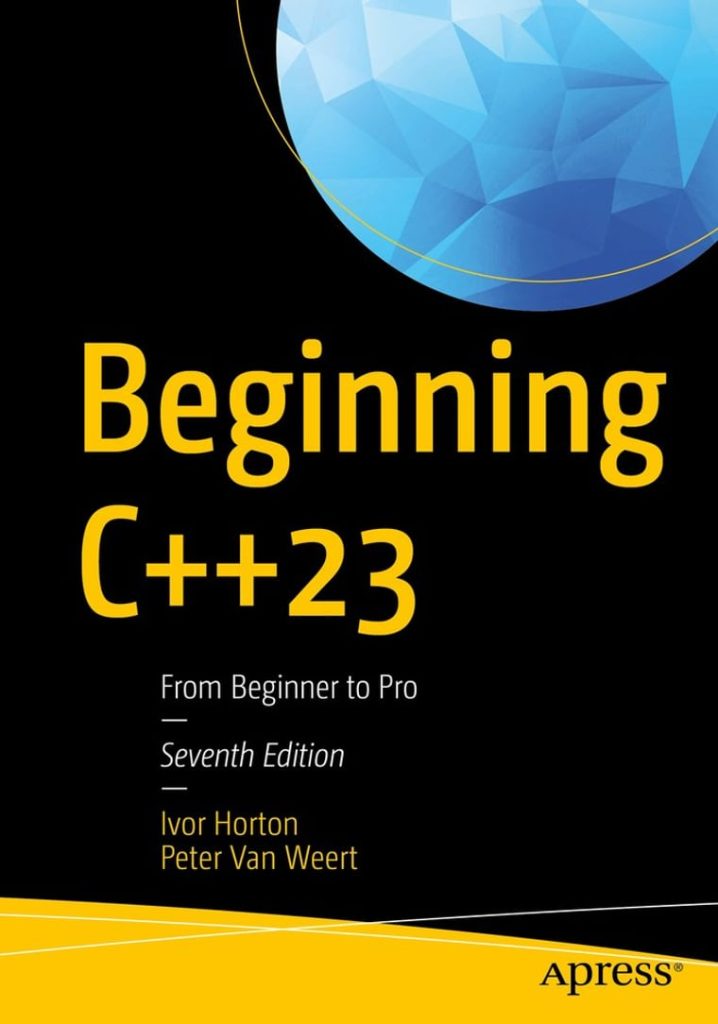
13. Beginning C++23

Beginning C++23: From Beginner to Pro by Ivor Horton and Peter Van Weert is aimed directly at people who want a comprehensive introduction to modern C++.
The important distinction is the name: this book is designed around C++23, rather than an older standard.
Who should read it?
- C++ beginners
- Students
- Developers who want a long-form tutorial
- Readers who prefer learning through examples and exercises
Who should skip it?
If you want a short introduction, its roughly 900-page scope may be intimidating.
It’s also not the best choice for an experienced C++ developer who only needs a C++23 feature reference.
Key details
- Authors: Ivor Horton and Peter Van Weert
- Edition: 7th
- Published: 2023
- Language: C++
- Standard: C++23
- Level: Beginner → Intermediate
Bottom line: A strong choice if you specifically want to learn C++ using a C++23-oriented textbook.
14. C++20: The Complete Guide

Nicolai M. Josuttis’ C++20: The Complete Guide focuses specifically on the major changes introduced by C++20.
Instead of teaching all of C++ from scratch, it assumes that you already know the language and explains the new features in depth.
Topics include:
- Concepts
- Ranges
- Coroutines
- Modules
- Three-way comparison
- New library facilities
- C++20 language changes
Who should read it?
Experienced C++ programmers who understand C++17 or earlier and need a serious C++20 reference.
Who should skip it?
Beginners. This isn’t a first C++ textbook.
Bottom line: A valuable upgrade for developers moving an existing codebase into the C++20 era.
15. The C++ Programming Language, 4th Edition

Another book by Bjarne Stroustrup, The C++ Programming Language is much more of a reference than a beginner tutorial.
The fourth edition provides extensive coverage of C++11 and explains many of the language’s underlying design decisions.
Who should read it?
- Experienced C++ developers
- Systems programmers
- Library developers
- Engineers who want a comprehensive reference
Who should skip it?
Beginners will likely find its size and density excessive.
It also predates C++14, C++17, C++20, and C++23.
Bottom line: An important C++ reference, but not the book to buy if your only objective is learning the latest standard.
16. Modern C++ Design

Andrei Alexandrescu’s Modern C++ Design is a classic in advanced C++ template programming.
Originally published in 2001, it explores generic programming, policy-based design, and template metaprogramming through the Loki library.
Who should read it?
- Advanced C++ developers
- Library authors
- Developers interested in template metaprogramming
- Programmers interested in the evolution of generic C++
Who should skip it?
Don’t use it as a modern C++ beginner book.
Much of the language and standard library has evolved since it was published, so its value today is primarily conceptual and historical.
Bottom line: Still interesting for advanced C++ programmers, but definitely not a C++23 guide.
Which C Book Should You Choose?
The answer depends heavily on your experience.
If you’ve never programmed
Start with:
Head First C
Its visual, hands-on teaching style makes concepts such as pointers and memory easier to approach.
If you’re an experienced programmer learning C
Start with:
Effective C, 2nd Edition
It gives you a modern, professional approach and covers C23. No Starch Press confirms the second edition was specifically updated for C23.
If you want deeper C23 knowledge
Read:
Modern C, 3rd Edition
Manning specifically positions it as a C23-focused book for readers with intermediate programming skills.
If you’re taking a university-style course
Consider:
C Programming: A Modern Approach
It’s much longer and more textbook-oriented than most introductory C books.
If you want to read the classic
Read:
The C Programming Language
Just remember that K&R is a classic—not a modern C23 reference.
Which C++ Book Should You Choose?
If you’ve never programmed
Start with:
Programming: Principles and Practice Using C++, 3rd Edition
It teaches programming fundamentals rather than assuming you already know them. Pearson lists the third edition as the current 2024 edition.
If you want a C++23-focused beginner book
Choose:
Beginning C++23
It’s much more explicitly aligned with C++23 than most classic C++ textbooks.
If you already know programming
Consider:
A Tour of C++
It’s compact and gives experienced programmers a broad view of modern C++.
If you know C++ but want better practices
Read:
Effective Modern C++
It remains useful for understanding C++11/14 features such as move semantics, smart pointers, lambdas, and perfect forwarding.
If you’re upgrading an existing C++ codebase
Consider:
C++20: The Complete Guide
It’s designed around the changes introduced by C++20 rather than teaching the entire language from scratch.
If you want an authoritative reference
Choose:
The C++ Programming Language
It’s the deepest classic reference in this list, although it doesn’t cover the newer C++ standards.
Should You Learn C or C++ First?
There is no universal requirement to learn one before the other.
Learning C first can give you a particularly clear understanding of:
- Memory
- Pointers
- Data representation
- Compilation
- Manual resource management
- Low-level programming
That foundation can make some C++ concepts easier to understand later.
However, starting with modern C++ can also make you productive faster because the language and standard library provide abstractions for many tasks that would require more manual work in C.
A useful rule is:
Choose C first if you are primarily interested in systems programming, embedded development, operating systems, or understanding low-level software.
Choose C++ first if you want to build larger applications, game engines, performance-sensitive software, or other systems where modern C++ abstractions are useful.
You don’t have to choose permanently. Many experienced developers eventually learn both.
C23 and C++23: Do You Need a Modern Book?
Yes—if your goal is to write contemporary code.
Older books remain valuable because the fundamentals don’t expire quickly. Concepts such as pointers, functions, arrays, data structures, compilation, memory, and algorithms remain relevant.
But the standards have continued to evolve.
C has progressed through standards including C89, C99, C11, C17, and C23, with C23 representing the current ISO C standard.
C++ has similarly evolved through C++11, C++14, C++17, C++20, and C++23.
That means a sensible learning strategy in 2026 is often:
Classic fundamentals + modern-standard reference
For example:
C:
Head First C
       ↓
The C Programming Language
       ↓
Effective C
       ↓
Modern C

C++:
Programming: Principles and Practice
       ↓
C++ Primer
       ↓
A Tour of C++
       ↓
C++20: The Complete Guide
You don’t need to read every book. Choose the path that matches your current skill level.
Are Old C and C++ Books Still Worth Reading?
Absolutely—but understand what you’re getting.
A book published decades ago can still be excellent at teaching fundamental programming concepts. K&R is the obvious example.
The problem comes when an old book is presented as if it were a guide to the latest standard.
For example:
- K&R: excellent C fundamentals, not C23
- C Programming: A Modern Approach: comprehensive C textbook, but C99-era
- C++ Primer: excellent C++11 tutorial, not a C++23 reference
- Effective Modern C++: excellent C++11/14 practices, not C++20/23
- The C++ Programming Language: authoritative C++11 reference, not current-standard coverage
- Modern C: specifically updated for C23
- Effective C: specifically updated for C23
- Beginning C++23: specifically aimed at C++23
The key is to know why you’re buying the book.
Final Thoughts
C and C++ remain excellent languages to learn in 2026, particularly if you’re interested in systems programming, game development, embedded software, performance-sensitive applications, operating systems, or understanding how software works closer to the hardware.
The best book depends on where you’re starting.
For C beginners, Head First C provides an approachable introduction, while C Programming: A Modern Approach offers a much more comprehensive textbook experience.
For modern C development, Effective C, 2nd Edition and Modern C, 3rd Edition are much better choices because they address C23. No Starch Press confirms Effective C 2nd Edition was rewritten around C23, while Manning describes Modern C 3rd Edition as fully revised for the same standard.
For C++, Programming: Principles and Practice Using C++, 3rd Edition is a strong starting point for complete beginners, while Beginning C++23 is worth considering if you specifically want a C++23-focused course.
Experienced C++ programmers can move to A Tour of C++, Effective Modern C++, or C++20: The Complete Guide, depending on whether they need an overview, better C++11/14 practices, or deeper C++20 knowledge.
Most importantly, don’t try to collect every programming book on the shelf.
Pick one appropriate to your level, work through the examples, write the exercises, build something with what you learn, and then move to a more advanced book.
A book you finish is worth considerably more than ten books sitting unread on your desk.
Frequently Asked Questions
What is the best C programming book for beginners in 2026?
Head First C is one of the most approachable choices for someone completely new to programming. If you already know another programming language, Effective C, 2nd Edition provides a more professional and modern route into C23.
What is the best C++ book for beginners in 2026?
Programming: Principles and Practice Using C++, 3rd Edition is designed to teach programming from the ground up using C++. Beginning C++23 is another option if you specifically want a C++23-oriented textbook.
Is K&R still worth reading in 2026?
Yes, especially for understanding classic C fundamentals and the concise programming style of Kernighan and Ritchie. However, K&R should not be treated as a guide to C23.
Is C++ Primer still worth reading?
Yes. C++ Primer remains a comprehensive C++ tutorial, but its fifth edition is based on C++11. Use a newer C++ book alongside it if you need C++20 or C++23 features.
Should I learn C before C++?
Not necessarily. C can provide an excellent foundation in memory management and low-level programming, but you can also learn modern C++ directly. The better choice depends on what you want to build and your existing programming experience.
What is the latest C standard?
C23 is the current ISO C standard. It was published as ISO/IEC 9899:2024.
What C++ standard should I learn in 2026?
For new learning, prioritize a modern C++ book that covers at least C++20, and preferably C++23 where appropriate. Older C++ books remain useful for fundamentals, but they should not be your only source for modern language features.
Add Tech2Geek as a preferred source on Google to see more of our latest tech articles.
Support Tech2Geek ❤️
Did this guide help you? If Tech2Geek saves you time or helps you solve a problem,
consider buying me a coffee. ☕
Your support helps keep Tech2Geek independent and free.
Comments