


For years, Linux carried the reputation of being “only for programmers and IT pros.” While modern distributions are now user-friendly enough for anyone, Linux still remains the gold standard for developers.
But here’s the real question:
What makes a Linux distribution ideal for developers?
Beyond general stability and app compatibility, developers need:
- Reliable compilers and build tools
- Access to modern libraries and SDKs
- Container and virtualization support
- Hardware compatibility (GPUs, ARM boards, embedded devices)
- Flexible package management
- Long-term stability or bleeding-edge updates (depending on workflow)
If you’re planning to switch to an open-source operating system—or upgrade your development environment—this guide covers the best Linux distributions for developers in 2026.
Let’s dive in.
1. Pop!_OS

Pop!_OS has quickly become a favorite among engineers, STEM professionals, and creative developers.
Developed by System76, it’s designed for people who use their computers to build, design, and innovate.
Why Developers Love Pop!_OS
- COSMIC desktop (Rust-based) optimized for workflow efficiency
- Advanced keyboard-driven navigation
- Built-in tiling window management
- Strong GPU support (especially NVIDIA)
- Preinstalled developer-friendly tools
Pop!_OS is particularly strong for:
- Machine learning
- Engineering workflows
- Multimedia production
- Scientific computing
- AI development
It balances usability and power, making it a fantastic choice for developers who want performance without excessive setup time.
2. Debian

Often called the “mother” of many Linux distributions, Debian powers countless operating systems—including Ubuntu.
If you’re building applications for Ubuntu-based systems, developing on Debian itself makes perfect sense.
Why Debian Is Ideal for Developers
- One of the most stable Linux distributions ever created
- Massive software repositories
- Extensive documentation
- Reliable long-term support
- Strong community ecosystem
Debian may not ship bleeding-edge software by default, but that stability is exactly what many developers need—especially for backend services or production systems.
If reliability is your priority, Debian is hard to beat.
3. Fedora Workstation

Fedora Workstation has built a reputation as a developer-first Linux distribution.
It’s fast, modern, and frequently integrates new technologies before most other mainstream distributions.
Key Benefits
- Cutting-edge kernel and software
- Excellent GNOME desktop integration
- Strong container and Kubernetes support
- Comprehensive Developer Portal
- Multiple desktop environment spins
Fedora offers detailed developer documentation covering:
- Programming frameworks
- Databases
- Development environments
- Code style guidelines
- DevOps tools
If you want modern Linux with enterprise relevance (since Fedora feeds into RHEL), this is one of the best choices available.
4. Arch Linux

Arch Linux is not beginner-friendly—but it is incredibly powerful.
When installing Arch, you build your system from the ground up. This gives you:
- Full control over installed components
- Minimal bloat
- Latest kernel and packages
- Deep system understanding
The Power of AUR

The Arch User Repository (AUR) contains tens of thousands of community-maintained packages.
Using PKGBUILD and makepkg, developers can:
- Compile software from source
- Customize packages
- Install niche development tools
Arch follows a rolling release model, meaning you always run the newest software versions.
It’s ideal for experienced developers who want total control and cutting-edge tools.
5. Raspberry Pi OS
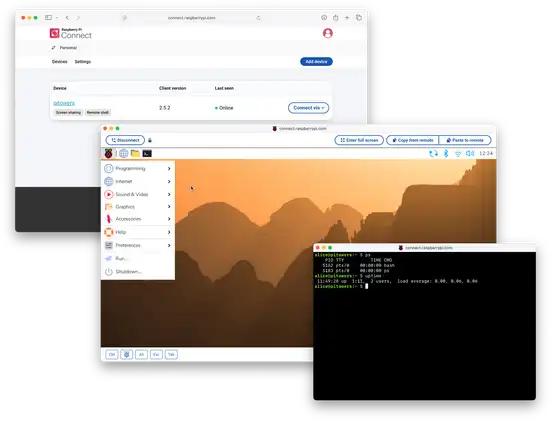
For embedded systems and IoT development, Raspberry Pi OS is the standard.
Designed specifically for Raspberry Pi hardware, it powers the majority of Raspberry Pi projects worldwide.
Best For
- IoT development
- Robotics
- Home automation
- Embedded systems
- Educational projects
It uses the lightweight PIXEL desktop and works seamlessly with ARM-based development.
If you’re building hardware-integrated software, this is your go-to platform.
6. Red Hat Enterprise Linux (RHEL)

You won’t find RHEL on every “developer distro” list—but you should.
If your goal is to work in enterprise environments, RHEL dominates the corporate world.
Why It Matters
- Widely used in large organizations
- Enterprise-grade stability
- Long-term support
- Professional certifications available
Red Hat offers a free developer subscription, allowing individuals to use RHEL for development at no cost.
If you’re targeting enterprise clients or corporate infrastructure, developing on RHEL gives you a serious advantage.
7. Rocky Linux

Rocky Linux is a 1:1 rebuild of RHEL—but fully open source.
It was created after changes to CentOS and is now one of the top RHEL-compatible distributions.
Why Developers Choose Rocky Linux
- Binary-compatible with RHEL
- Free community edition
- Enterprise-ready environment
- Stable production platform
You can start with the free version and later transition to commercial support if needed.
For developers building SaaS platforms or enterprise services, Rocky Linux is a strong and practical choice.
8. Ubuntu

No list would be complete without Ubuntu.
While not specifically targeted at developers, Ubuntu has become one of the most widely used Linux distributions in the world.
Why Ubuntu Is Still a Top Choice
- Massive global user base
- Extensive documentation
- Large community support
- Huge software repositories
- Beginner-friendly setup
Install the build-essential package, and you’re ready to start compiling immediately.
Ubuntu also promotes Snap packaging, allowing developers to distribute apps across multiple Linux distributions easily.
If you want maximum compatibility and broad reach, Ubuntu remains a safe and powerful choice.
How to Choose the Right Linux Distro for Development
Here’s a simplified breakdown:
| Use Case | Best Option |
|---|---|
| Enterprise Development | RHEL / Rocky Linux |
| Cutting-Edge Software | Fedora / Arch |
| Stability & Reliability | Debian |
| AI & STEM Workflows | Pop!_OS |
| IoT & Embedded | Raspberry Pi OS |
| General Development | Ubuntu |
Your choice depends on your goals:
- Want stability? → Debian
- Want bleeding-edge tools? → Arch
- Want enterprise credibility? → RHEL
- Want flexibility with broad compatibility? → Ubuntu
Final Thoughts:
Linux is no longer just “for developers”—but it’s still the most powerful environment for development.
Whether you prioritize stability, innovation, hardware compatibility, or enterprise readiness, there’s a Linux distribution tailored to your workflow.
The good news? You don’t have to commit permanently. Most of these distributions are free, allowing you to test and experiment before settling on your primary development environment.
Choose the distro that aligns with your goals, your projects, and your future career path.
Because in Linux, flexibility is the ultimate advantage.
And if you'd like to go a step further in supporting us, you can treat us to a virtual coffee ☕️. Thank you for your support ❤️!

We do not support or promote any form of piracy, copyright infringement, or illegal use of software, video content, or digital resources.
Any mention of third-party sites, tools, or platforms is purely for informational purposes. It is the responsibility of each reader to comply with the laws in their country, as well as the terms of use of the services mentioned.
We strongly encourage the use of legal, open-source, or official solutions in a responsible manner.
As a developer, I think Debian 14 (Forky) with Plasma is the best!
It’s very stable, fast and has a huge repository (about 72K packages), where pretty much everything can be found.
Plasma is great for productivity with so many intuitive designs, shortcuts and with Kdevelop, Kate, Kwrite and Kcachegrind working great on it!
The .deb version of Librewolf web browser also works great and it’s very fast!
For extra security besides Wayland being the default for Plasma, FireJail sandboxing system and Opensnitch + UFW firewalls are available in its repository!
I couldn’t recommending it more.
Thank you John for this interesting information; it’s useful for me and for our readers.