

Imagine running a criminal business with developers, affiliates, technical support, cryptocurrency payments, a leak website, and even rules about which victims you are “allowed” to attack.
It sounds absurd.
But that is essentially what DarkSide ransomware built in 2020 and 2021.
DarkSide wasn’t the first ransomware operation, and it certainly wasn’t the last. What made it particularly important was the way it combined ransomware-as-a-service (RaaS), data theft, double extortion, affiliate recruitment, and professionalized criminal infrastructure.
Then came Colonial Pipeline.
In May 2021, a DarkSide affiliate compromised the U.S. pipeline operator, forcing Colonial Pipeline to shut down portions of its network. The disruption lasted several days and contributed to fuel shortages and panic buying across parts of the United States. CISA and the FBI confirmed that DarkSide ransomware had been deployed against Colonial’s IT network, while the company disconnected certain operational systems as a precaution.
Colonial eventually paid approximately 75 Bitcoin, worth about $4.3 million at the time. Less than a month later, the U.S. Department of Justice announced that it had recovered approximately 63.7 Bitcoin, then valued at about $2.3 million, from the ransom payment.
For DarkSide, Colonial Pipeline was supposed to be another profitable ransomware operation.
Instead, it became the attack that put the entire ransomware ecosystem under a global spotlight.
What Was DarkSide Ransomware?
DarkSide was a ransomware-as-a-service operation, or RaaS.
Instead of requiring one criminal organization to perform every part of an attack, the RaaS model separates the work.
The developers create and maintain the ransomware.
Affiliates find victims and gain access to their networks.
The criminals then split the proceeds.
The U.S. government explicitly described DarkSide as a ransomware-as-a-service network in the aftermath of the Colonial Pipeline attack.
This model dramatically lowers the technical barrier for cybercriminals.
A skilled ransomware developer doesn’t necessarily need to spend weeks breaking into a company.
An affiliate can do that part.
Likewise, an attacker who is good at compromising corporate networks doesn’t necessarily need to write their own encryption malware.
They can rent it.
That division of labor is one reason ransomware became such a scalable criminal business.
When Did DarkSide Start?
DarkSide emerged around August 2020 and quickly began targeting large organizations.
According to CISA and the FBI, DarkSide actors targeted large, high-revenue organizations and were known for stealing sensitive data before encrypting systems.
This was a deliberate strategy.
DarkSide wasn’t interested in randomly encrypting as many computers as possible.
The group focused on what security researchers call “big game hunting”: targeting organizations that appeared capable of paying substantial ransoms.
That meant large corporations and organizations with valuable data, significant operational dependencies, and little tolerance for prolonged downtime.
The objective was simple:
Find victims who have a lot to lose.
DarkSide’s Ransomware-as-a-Service Business Model
The most important innovation associated with DarkSide wasn’t the ransomware itself.
It was the business model.
DarkSide operated as a criminal platform.
The developers provided the malware and supporting infrastructure, while affiliates handled attacks against individual victims.
When an affiliate successfully extorted a victim, the proceeds were divided between the participants.
The exact revenue split could vary depending on the size of the ransom, but the basic concept was similar to a technology company taking a percentage of transactions generated by its platform.
Except the platform was ransomware.
This approach offered several advantages.
Developers could specialize
The people maintaining DarkSide’s ransomware could focus on malware development, encryption, infrastructure and updates.
Affiliates could specialize
Attackers with expertise in compromising corporate networks could concentrate on initial access, lateral movement and identifying valuable systems.
Risk could be distributed
If an affiliate was arrested or identified, the developers could potentially continue operating with other affiliates.
The operation could scale
Instead of one criminal team attacking one victim at a time, multiple affiliates could conduct attacks simultaneously.
That is the fundamental strength of RaaS.
It turns ransomware from a single criminal operation into an ecosystem.
DarkSide’s Double-Extortion Strategy
Traditional ransomware works by encrypting a victim’s files and demanding money for the decryption key.
DarkSide added another layer.
Before encrypting systems, attackers could steal sensitive information.
The victim then faced two threats:
Pay us to decrypt your files.
And:
Pay us or we’ll publish your stolen data.
This became known as double extortion.
CISA describes double extortion as the combination of data encryption and data theft, followed by threats to publicly release the stolen information.
The strategy dramatically increases pressure on victims.
Even if a company has reliable backups, those backups don’t solve the problem if attackers have already copied confidential documents.
A company might be able to restore its servers without paying.
But it still has to worry about:
- Customer information
- Financial records
- Employee data
- Contracts
- Internal communications
- Intellectual property
- Legal documents
- Business plans
DarkSide understood that distinction very well.
The DarkSide Leak Website
DarkSide also operated a leak site where stolen information could be published if victims refused to pay.
This was an important part of the extortion process.
Instead of simply telling a company that its files had been stolen, attackers could demonstrate that they had the data by publishing samples.
That created another form of pressure.
The threat became more credible.
And the criminals could use the leaked information to attract media attention, increasing pressure on the victim.
This approach later became standard across much of the ransomware ecosystem.
DarkSide’s “Rules” for Choosing Victims
One of the strangest aspects of DarkSide was its attempt to impose rules on affiliates.
The group publicly claimed that certain organizations were off limits, including hospitals, schools, nonprofits and government institutions.
CISA and the FBI noted that DarkSide publicly claimed to prefer organizations capable of paying large ransoms rather than hospitals, schools, nonprofits and governments.
Of course, this shouldn’t be confused with genuine corporate ethics.
It was a criminal risk-management strategy.
Attacking a hospital can generate enormous political pressure.
Attacking critical infrastructure can attract federal law enforcement.
Attacking a small nonprofit may not generate enough money to justify the risk.
DarkSide’s supposed “rules” were therefore less about morality and more about protecting the business.
Colonial Pipeline demonstrated how quickly that strategy could fail.
The Colonial Pipeline Attack

Everything changed in May 2021.
Colonial Pipeline operates one of the largest fuel pipeline systems in the United States, transporting gasoline, diesel and jet fuel across thousands of miles.
On or around May 7, 2021, Colonial Pipeline suffered a ransomware attack attributed to DarkSide.
The attackers gained access to the company’s IT environment and deployed DarkSide ransomware.
CISA and the FBI reported that there was no indication at the time that the ransomware directly affected Colonial’s operational technology network. However, Colonial disconnected portions of its infrastructure as a precaution.
That decision had enormous consequences.
The pipeline was a critical part of the U.S. fuel distribution network.
When it stopped operating normally, fuel suppliers and consumers across parts of the East Coast were affected.
Gas stations experienced shortages.
Fuel prices increased.
Drivers rushed to fill their tanks.
Some stations ran out of gasoline completely.
And images of Americans waiting in long lines at gas stations became a defining symbol of the incident.
Did DarkSide Actually “Shut Down” the U.S. Fuel Supply?
This is where headlines can become misleading.
DarkSide did not directly hack into an industrial control system and remotely manipulate pipeline valves.
CISA and the FBI specifically stated that there was no indication that the operational technology network had been directly affected by the ransomware.
Instead, the ransomware hit Colonial’s IT network, and the company took parts of its infrastructure offline.
That distinction matters.
The incident demonstrated that critical infrastructure can be disrupted even when industrial control systems themselves aren’t directly compromised.
If an organization’s business systems become unavailable, operators may decide that shutting down physical operations is safer than continuing without reliable IT systems.
That’s exactly why ransomware against critical infrastructure is so dangerous.
You don’t necessarily need to control the machinery.
Sometimes disrupting the computers supporting the machinery is enough.
How Did Attackers Get Into Colonial Pipeline?
The initial access vector became one of the most discussed details of the attack.
Reports indicated that the attackers used a compromised VPN account belonging to a former employee. The account did not have multi-factor authentication enabled.
The incident became a textbook example of why organizations need to secure remote access accounts—even accounts that may appear unused.
A single compromised credential can become the entry point into a much larger corporate network.
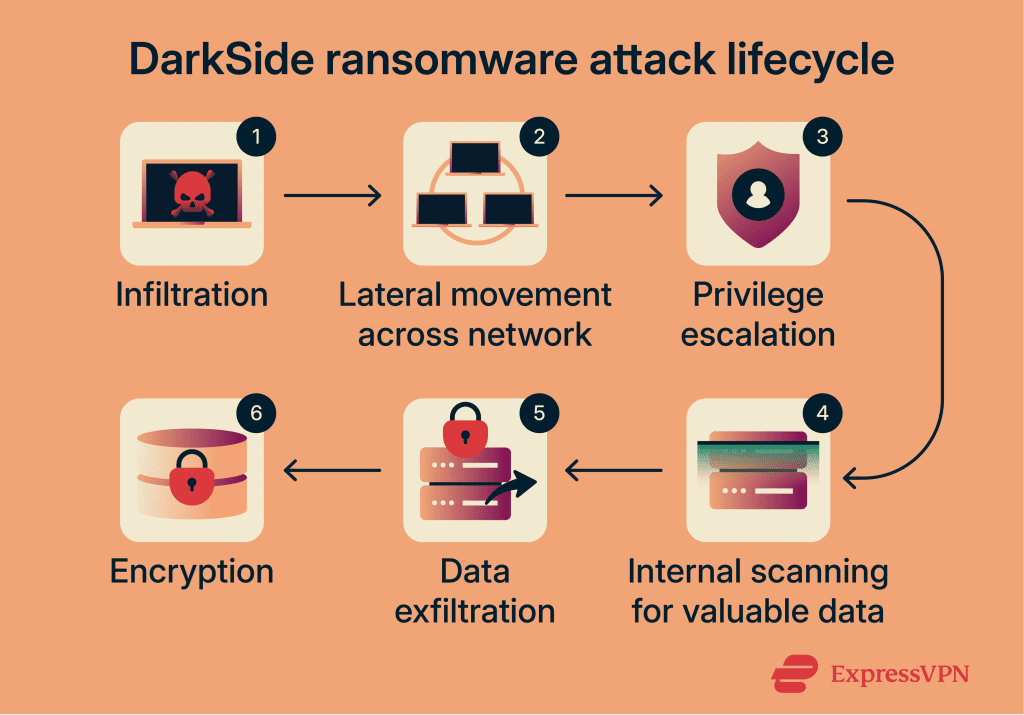
Once attackers get inside, the real danger begins.
They can attempt to:
- Discover additional systems
- Identify administrators
- Move laterally through the network
- Locate valuable files
- Disable security controls
- Identify backups
- Steal sensitive information
- Deploy ransomware across multiple systems
CISA and the FBI subsequently emphasized multi-factor authentication, network segmentation, phishing protection, patching and isolated backups as key defenses against ransomware.
Colonial Pipeline Paid the Ransom
Colonial Pipeline ultimately paid approximately 75 Bitcoin to the attackers.
At the time of the transaction, the payment was worth roughly $4.3 million according to the DOJ affidavit.
The decision was controversial.
Why would a major company pay criminals?
Because ransomware decisions are rarely as simple as “never pay.”
Executives have to consider:
- How long systems will remain unavailable
- Whether backups work
- How much downtime costs
- Whether customer safety is affected
- Whether sensitive data has been stolen
- Whether the attacker can actually decrypt the systems
- Legal and regulatory consequences
Colonial’s CEO later explained that the company considered the payment necessary under the circumstances.
But paying didn’t mean the problem was solved.
The attackers provided a decryption tool.
And the recovery process reportedly wasn’t particularly fast.
Colonial ultimately relied heavily on its own recovery capabilities.
The FBI Recovered $2.3 Million of the Bitcoin

Then came a remarkable development.
Because Bitcoin transactions are recorded on a public blockchain, investigators could follow the movement of the ransom.
The DOJ announced on June 7, 2021, that the FBI had seized approximately 63.7 Bitcoin, worth about $2.3 million at the time.
The government explained that investigators traced transfers through the Bitcoin public ledger and ultimately identified a specific cryptocurrency address for which the FBI possessed the private key.
That allowed the government to seize the funds.
This was an important reminder that Bitcoin isn’t truly anonymous.
Bitcoin transactions are pseudonymous.
The blockchain publicly records transactions.
The difficult part is connecting an address to a real person or organization.
Once investigators establish that connection, however, the transaction history can become an extremely useful forensic resource.
The DarkSide seizure was therefore a major demonstration of the value of blockchain analysis in cybercrime investigations.
DarkSide’s Shutdown
The Colonial Pipeline attack triggered an extraordinary law-enforcement response.
Only days later, DarkSide announced that it was shutting down.
On May 14, 2021, the group reportedly told affiliates that its servers had been seized and that cryptocurrency belonging to the operation had been transferred elsewhere.
The group effectively disappeared.
But that didn’t mean ransomware disappeared.
Far from it.
The people behind these operations already understood something important:
The brand can disappear. The business model doesn’t have to.
Was DarkSide Really Gone?
Not necessarily.
Ransomware groups frequently disappear, rebrand or reorganize.
The infrastructure may be seized.
The administrators may lose access to cryptocurrency.
Affiliates may move to another ransomware operation.
Developers may release new malware under a different name.
That makes it difficult to treat a ransomware shutdown like the closure of a legitimate company.
In July 2021, BlackMatter appeared.
CISA and its government partners later described BlackMatter as a possible rebrand of DarkSide. BlackMatter was another ransomware-as-a-service operation that targeted organizations in the United States and elsewhere.
The similarities were significant enough for cybersecurity researchers and government agencies to investigate the connection.
BlackMatter did not last indefinitely either.
But by then, the RaaS model had already spread far beyond DarkSide.
DarkSide’s Technical Playbook
DarkSide wasn’t successful because it possessed one magical piece of malware.
Its strength came from combining multiple techniques.
CISA and the FBI observed DarkSide using methods including phishing, exploitation of publicly accessible applications, remote services and ransomware deployment. The malware itself used Salsa20 and RSA encryption, while attackers used tools such as Cobalt Strike and TOR during operations.
The attackers also relied heavily on legitimate administrative tools.
This is sometimes called living off the land.
Instead of deploying a suspicious tool for every task, attackers can abuse software already present inside a corporate environment.
That creates a serious detection challenge.
An administrator running PowerShell isn’t automatically suspicious.
A legitimate remote-management tool isn’t automatically malicious.
A security team therefore has to determine whether the activity is normal for that particular user, computer and network.
That is much harder than simply blocking a known ransomware executable.
Why Ransomware-as-a-Service Changed Cybercrime
DarkSide’s biggest legacy may not be Colonial Pipeline.
It may be the normalization of the RaaS business model.
The concept is surprisingly similar to legitimate software businesses.
Developers maintain a product.
Customers or affiliates use it.
Revenue is shared.
Support is provided.
Infrastructure is maintained.
New versions are released.
Except the product is ransomware.
This division of labor allows criminal organizations to specialize.
One group can focus on malware development.
Another can focus on gaining initial access.
Another can handle cryptocurrency laundering.
Another can negotiate with victims.
The result is a criminal supply chain.
And that’s why ransomware remains such a persistent threat years after DarkSide disappeared.
What Colonial Pipeline Taught the Cybersecurity Industry
The Colonial Pipeline attack became a wake-up call for U.S. critical infrastructure.
One of the most important lessons was that IT security and operational resilience are inseparable.
Companies can’t assume that industrial systems are safe simply because attackers haven’t directly compromised them.
If business systems are unavailable, operations may still have to stop.
CISA and the FBI subsequently recommended several defenses for critical infrastructure organizations, including:
- Multi-factor authentication for remote access
- Strong network segmentation
- Regularly tested backups
- Offline or isolated backups
- Phishing-resistant security practices
- Regular software and firmware updates
- Monitoring for suspicious activity
- Removal of unnecessary applications
- Incident-response planning
These aren’t exotic technologies.
They’re basic cybersecurity controls.
And that’s one of the most uncomfortable lessons from Colonial Pipeline.
The attackers didn’t need a science-fiction weapon.
They needed a foothold.
The DarkSide Legacy
DarkSide itself is gone.
But its model survived.
Ransomware-as-a-service became one of the dominant structures in modern cybercrime.
The basic formula remains remarkably effective:
Compromise → steal data → encrypt systems → demand payment → threaten publication.
If a victim has strong backups, attackers can emphasize the stolen data.
If the victim can restore its files, criminals can threaten regulatory exposure.
If the victim refuses to negotiate, attackers can leak samples.
Every layer adds pressure.
That is why modern ransomware attacks are better understood as data-extortion operations, rather than simple file-encryption attacks.
CISA now explicitly treats data theft and extortion as part of the broader ransomware threat landscape.
Why DarkSide Still Matters Today
It would be easy to look at DarkSide as an old ransomware story from 2021.
That would be a mistake.
DarkSide demonstrated how effectively cybercriminals could combine:
- Ransomware development
- Affiliate recruitment
- Cryptocurrency payments
- Data theft
- Double extortion
- Leak sites
- Negotiation
- Technical support
- Specialized criminal roles
That playbook didn’t disappear when DarkSide shut down.
Other ransomware groups adopted and refined the same concepts.
The names change.
The malware changes.
The infrastructure changes.
The business model remains remarkably similar.
The Most Important Lesson From DarkSide
The Colonial Pipeline incident wasn’t a story about an unstoppable hacker group.
It was a story about systemic risk.
A compromised remote-access account helped attackers gain entry.
A ransomware operation turned that access into extortion.
Colonial’s decision to disconnect systems helped prevent a potentially more dangerous operational incident.
The resulting disruption affected fuel distribution across the East Coast.
Law enforcement then followed the cryptocurrency trail and recovered millions of dollars.
And the pressure eventually contributed to DarkSide’s disappearance.
The entire chain demonstrates why modern cybersecurity cannot focus exclusively on antivirus software or firewalls.
Security has to include identity protection, MFA, network segmentation, backups, monitoring, incident response and financial tracing.
DarkSide’s greatest achievement wasn’t creating the world’s most sophisticated ransomware.
It was proving how efficiently cybercrime could be organized as a business.
And its greatest mistake was attacking critical infrastructure so visibly that the entire U.S. government made dismantling the operation a priority.
Final Thoughts
DarkSide turned ransomware into something resembling a criminal technology company.
It had developers.
It had affiliates.
It had infrastructure.
It had negotiation processes.
It had cryptocurrency operations.
It had a leak platform.
And it had a scalable business model.
Then it attacked Colonial Pipeline.
That single incident transformed DarkSide from another ransomware group into a household name and demonstrated just how vulnerable modern economies can be to cyberattacks.
The FBI’s recovery of 63.7 Bitcoin from the Colonial ransom also delivered another important message: cryptocurrency doesn’t necessarily make cybercriminals untouchable. Investigators can follow the money, correlate blockchain transactions with other evidence and, when they obtain the necessary credentials or keys, seize criminal proceeds.
DarkSide eventually disappeared.
But its business model didn’t.
That’s the real legacy of DarkSide ransomware.
The criminals learned how to run ransomware like a service—and the cybersecurity industry had to learn how to fight an entire criminal economy rather than a single piece of malware.
Sources
- U.S. Department of Justice — DarkSide cryptocurrency seizure — Primary source for the 75 BTC Colonial ransom and recovery of 63.7 BTC.
- CISA/FBI — DarkSide Ransomware Advisory — Technical details, mitigations and Colonial Pipeline findings.
- CISA/FBI — DarkSide Technical Advisory — RaaS model, attack techniques, double extortion and encryption details.
- U.S. Department of Justice — Colonial Pipeline Ransomware Investigation — DOJ’s description of DarkSide and the law-enforcement response.
- KrebsOnSecurity — DarkSide ransomware shutdown — Contemporary reporting on DarkSide’s May 2021 shutdown.
- CISA/FBI/NSA — BlackMatter Ransomware — Government assessment that BlackMatter was a possible DarkSide rebrand.
Add Tech2Geek as a preferred source on Google to see more of our latest tech articles.
Support Tech2Geek ❤️
Did this guide help you? If Tech2Geek saves you time or helps you solve a problem,
consider buying me a coffee. ☕
Your support helps keep Tech2Geek independent and free.
Comments