
Search is evolving faster than ever—and Google may be preparing one of its most disruptive changes yet. Imagine searching for a product or service and landing not on a company’s website, but on a custom-built page created in real time just for you. That’s exactly what a newly surfaced Google patent suggests.
This concept of AI-generated landing pages tailored to individual users could reshape how people interact with search results—and how businesses approach SEO, content, and conversions.
What Is Google’s AI-Generated Landing Page Patent?
The patent outlines a system where Google uses artificial intelligence to dynamically create personalized landing pages based on a user’s search query, behavior, and context.
Instead of directing users to a standard homepage or product page, Google could generate a custom page designed specifically to match user intent—pulling content from a company’s website and enhancing it with AI-generated elements.
This means every user could see a slightly different version of a page depending on factors like:
- Search intent
- Browsing history
- Purchase behavior
- Brand loyalty
- Price sensitivity
Why This Matters for Search
Traditionally, SEO has been about optimizing pages to rank higher in search results. But with this system, Google could go a step further by rebuilding your content on the fly—potentially bypassing your original page design entirely.
In simple terms:
- Google evaluates your page
- Decides if it meets the user’s needs
- If not, it creates a better version using AI
This raises a big question:
👉 Will websites lose control over how their content is presented?
How the Technology Works
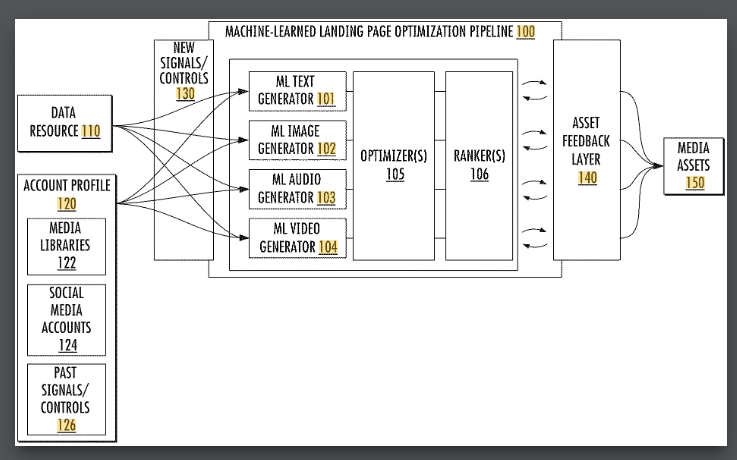
Here’s a simplified breakdown of the process described in the patent:
1. User Search Query
A user enters a search term into Google.
2. Identifying the Best Match
Google selects a relevant result from a specific business or organization.
3. Landing Page Evaluation
The system assigns a score to the existing landing page based on how well it matches the user’s intent.
4. AI Page Creation
If the original page falls short, Google generates a new, optimized landing page using AI. This page may include:
- Extracted content from the original site
- AI-written summaries
- Reorganized layouts
- Highlighted key information
5. Updated Search Results
Google then displays a link to this AI-generated page directly in the search results—potentially replacing the original page.
Potential Impact on SEO and Digital Marketing
If implemented, this technology could fundamentally change how websites attract and convert visitors.
1. Less Control Over User Experience
Brands carefully design landing pages for conversions. AI-generated pages could override:
- Page layouts
- Calls-to-action
- Branding elements
2. Increased Competition for Relevance
It won’t be enough to rank anymore. Your content must be:
- Highly relevant
- Well-structured
- Easy for AI to interpret and reuse
3. Rise of “AI-Friendly Content”
Websites may need to optimize for AI systems, not just search engines. That includes:
- Clear headings
- Structured data (schema)
- Concise, high-quality information
4. Opportunities for Better Conversions
On the positive side, hyper-personalized pages could:
- Improve user experience
- Increase conversion rates
- Reduce bounce rates
What This Means for E-Commerce
For online stores, this could be especially powerful. Google’s AI could generate product pages tailored to:
- New vs. returning customers
- Budget-conscious shoppers
- Premium buyers
For example:
- A price-sensitive user might see discounts highlighted
- A loyal customer might see premium options first
This level of personalization could outperform traditional landing pages—but also reduce direct control for brands.
Concerns and Controversy
This concept is already raising concerns among SEO experts and marketers:
- Ownership of content: Who controls the final presentation?
- Brand identity risks: AI pages may not reflect a company’s branding
- Traffic disruption: Users may never visit the original website
- Ad and revenue implications: Google could dominate even more of the user journey
If Google already sparked debate with AI-generated search summaries, this could take things much further.
Is This the Future of Search?
It’s important to remember: this is a patent, not a confirmed feature. Google files many patents that never become products.
However, the direction is clear—search is moving toward:
- Personalization
- AI-driven experiences
- Instant answers over traditional navigation
And this idea fits perfectly into that evolution.
Final Thoughts
Google’s AI-generated landing pages could redefine the relationship between users, search engines, and websites. While the technology promises better personalization and improved user experiences, it also introduces major challenges for SEO, branding, and content ownership.
For businesses and content creators, the takeaway is clear:
👉 Focus on high-quality, structured, and intent-driven content that AI systems can easily understand and adapt.
Because in the near future, ranking on Google might not just mean getting clicks—it might mean letting AI reshape your content entirely.
And if you'd like to go a step further in supporting us, you can treat us to a virtual coffee ☕️. Thank you for your support ❤️!

We do not support or promote any form of piracy, copyright infringement, or illegal use of software, video content, or digital resources.
Any mention of third-party sites, tools, or platforms is purely for informational purposes. It is the responsibility of each reader to comply with the laws in their country, as well as the terms of use of the services mentioned.
We strongly encourage the use of legal, open-source, or official solutions in a responsible manner.
Comments