
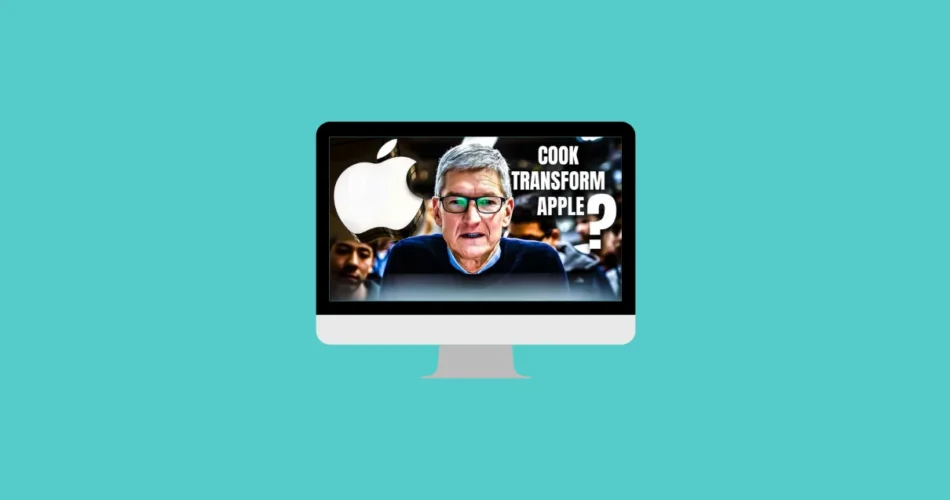
For decades, Apple has been more than just a technology company. It has shaped industries, redefined consumer electronics, and built one of the most loyal customer bases in the world. Products like the iPhone, iPad, and Mac changed how billions of people communicate, work, and entertain themselves.
Yet despite record-breaking profits and an unrivaled market valuation, Apple faces growing criticism from investors, analysts, and longtime fans. Many argue that the company has become exceptionally good at maximizing profits while struggling to produce the kind of groundbreaking innovations that once defined its identity.
Recent challenges—including slowing iPhone sales, increasing competition in artificial intelligence, geopolitical tensions with China, and questions about Apple’s future product roadmap—have intensified the debate.
At the center of this discussion is CEO Tim Cook.
Widely regarded as one of the greatest business executives of his generation, Cook inherited a company built on Steve Jobs’ vision and transformed it into an unprecedented financial powerhouse. Under his leadership, Apple became the first publicly traded company to surpass multiple trillion-dollar market capitalization milestones.
But financial success has also raised an uncomfortable question:
Has Apple become too focused on operational excellence and shareholder value at the expense of bold innovation?
To answer that question, we need to understand how Apple evolved after Steve Jobs—and why the company’s greatest strength may also be its greatest vulnerability.

Apple’s Heavy Dependence on China
When people think about Apple, they usually picture sleek iPhones designed in California.
Few realize just how dependent the company has become on China.
That dependence extends far beyond manufacturing.
Today, China plays two essential roles in Apple’s business model:
- It serves as Apple’s primary manufacturing center.
- It represents one of Apple’s largest consumer markets.
This dual reliance has become one of the biggest strategic risks facing the company.
China Powers Apple’s Global Supply Chain

Building hundreds of millions of premium smartphones every year is an extraordinary logistical challenge.
Apple relies on an extensive network of suppliers, assembly plants, and component manufacturers spread across Asia, with China serving as the heart of its production ecosystem.
Factories operated by manufacturing partners assemble iPhones, iPads, AirPods, Apple Watches, and many Mac computers before shipping them worldwide.
This manufacturing strategy wasn’t created by accident.
It was largely the result of Tim Cook’s expertise in supply chain management long before he became Apple’s CEO.
By optimizing production, reducing inventory, and streamlining logistics, Apple dramatically lowered manufacturing costs while increasing efficiency.
The strategy helped transform Apple into one of the world’s most profitable companies.
However, it also concentrated a significant portion of Apple’s operations in a single country.
China Is Also One of Apple’s Largest Markets

China isn’t only where Apple builds its products.
It’s also one of the company’s biggest sources of revenue.
Millions of Chinese consumers purchase Apple devices every year, making the country one of Apple’s most important international markets.
This creates a delicate balance.
Apple depends on China to manufacture its products while simultaneously relying on Chinese consumers to buy them.
If either side of that equation changes, Apple’s financial performance can be affected.
Geopolitical Risks Are Becoming Harder to Ignore

Over the past several years, relations between the United States and China have become increasingly tense.
Trade disputes, export restrictions, semiconductor regulations, and tariff discussions have introduced significant uncertainty for multinational technology companies.
Apple sits directly at the center of these tensions.
Whenever new tariffs or trade restrictions are proposed, investors immediately question how they might affect Apple’s manufacturing costs, product pricing, or supply chain stability.
Even rumors of escalating political conflict have, at times, triggered sharp movements in Apple’s stock price.
For a company valued in the trillions of dollars, geopolitical uncertainty represents more than a political issue—it becomes a business risk that investors closely monitor.
Why Diversifying Manufacturing Isn’t Easy

Some observers ask a simple question:
Why doesn’t Apple move production somewhere else?
In reality, relocating Apple’s supply chain is one of the most complicated industrial challenges imaginable.
China offers advantages that few countries can match simultaneously:
- A massive skilled manufacturing workforce
- Highly developed supplier networks
- Advanced logistics infrastructure
- Specialized component manufacturers
- Decades of experience assembling complex consumer electronics
Apple has expanded manufacturing into countries such as India and Vietnam, but reproducing China’s ecosystem will take years rather than months.
Building factories is relatively straightforward.
Recreating an entire industrial network is far more difficult.
The Bigger Issue Isn’t China
Although geopolitical tensions generate headlines, they are not necessarily Apple’s greatest challenge.
The more significant debate concerns the company’s direction under Tim Cook.
Critics argue that Apple has become exceptionally efficient at refining existing products while producing fewer revolutionary breakthroughs than it did during the Steve Jobs era.
Supporters counter that maintaining innovation inside a company employing more than 160,000 people and serving billions of customers is fundamentally different from leading a much smaller organization.
Regardless of which perspective proves correct, one fact is undeniable:
Apple today operates very differently than it did fifteen years ago.
To understand why, we need to examine the man responsible for that transformation.
Who Is Tim Cook?

Unlike Steve Jobs, Tim Cook didn’t build his reputation by inventing revolutionary products.
His expertise came from something much less glamorous—but equally important.
Operations.
Logistics.
Efficiency.
Long before joining Apple, Cook built a career solving complex business problems rather than designing new technology.
Instead of asking:
“What should we invent next?”
He asked:
“How can we build products faster, cheaper, and more efficiently?”
That mindset would eventually reshape Apple’s future.
From Small-Town Alabama to Corporate Leadership
Born in Alabama in 1960, Tim Cook developed a reputation for discipline and hard work from an early age.
Rather than pursuing industrial design or software engineering, he studied industrial engineering, a field focused on improving manufacturing systems, productivity, and operational efficiency.
Throughout his early career, Cook worked in operations and supply chain management for several major technology companies.
Those experiences taught him how to optimize production, reduce waste, negotiate with suppliers, and streamline global logistics.
While many technology executives dreamed about inventing the next groundbreaking product, Cook specialized in making businesses run better.
That skill would prove invaluable when Apple faced one of the most difficult periods in its history.
Why Steve Jobs Recruited Tim Cook

In the late 1990s, Apple was far from the technology giant we know today.
The company had recently returned Steve Jobs to the CEO position and was struggling to recover financially.
Apple needed more than visionary ideas.
It needed operational discipline.
Steve Jobs recognized that building great products wasn’t enough if the company couldn’t manufacture and deliver them efficiently.
Tim Cook offered exactly the expertise Apple lacked.
After joining Apple in 1998, Cook immediately focused on simplifying the company’s supply chain.
He reduced inventory dramatically, streamlined manufacturing, improved supplier relationships, and created one of the most efficient production systems in the technology industry.
These changes reduced costs, accelerated product launches, and allowed Apple to scale globally as demand for products like the iPod, iPhone, and iPad exploded.
Cook became one of Jobs’ most trusted executives.
Whenever Jobs stepped away for medical treatment, Cook frequently assumed day-to-day leadership responsibilities.
By the time Steve Jobs resigned as CEO in 2011, many inside Apple believed Cook was the natural successor.
Taking Over After Steve Jobs
Replacing Steve Jobs was widely considered one of the most difficult leadership transitions in corporate history.
Jobs wasn’t simply Apple’s CEO.
He was its visionary, chief product strategist, and public face.
Tim Cook inherited a company unlike any other.
Rather than trying to imitate Jobs’ leadership style, Cook focused on his own strengths.
He emphasized operational excellence, financial discipline, global expansion, and long-term stability.
That approach would eventually make Apple the most valuable company in the world.
But it would also spark an ongoing debate that continues today:
Can operational excellence replace visionary innovation—or does a technology company ultimately need both?
How Tim Cook Made Apple a Wall Street Powerhouse

When Tim Cook became Apple’s CEO in August 2011, he inherited one of the most admired companies in the world. Steve Jobs had spent years transforming Apple into an innovation leader through groundbreaking products like the iPhone, iPad, and MacBook Air.
Cook faced a very different challenge.
Instead of rescuing a struggling company, he needed to maintain Apple’s momentum while satisfying investors who expected continuous growth from a business already generating tens of billions of dollars in annual revenue.
Rather than trying to become another Steve Jobs, Cook doubled down on what he understood best: operational efficiency, financial discipline, and long-term profitability.
The strategy worked.
Under Cook’s leadership, Apple evolved from an innovative hardware manufacturer into one of the most financially successful companies in history.
A Different Kind of CEO
Steve Jobs was known for asking one question:
“What revolutionary product should we build next?”
Tim Cook approached Apple from another angle:
“How can we make this business stronger, more efficient, and more profitable?”
Those two philosophies aren’t mutually exclusive, but they lead to different priorities.
Jobs concentrated on product innovation.
Cook concentrated on building a business capable of generating enormous, predictable cash flow year after year.
That shift fundamentally changed Apple’s relationship with investors.
Winning Wall Street’s Confidence
One of Cook’s earliest priorities was strengthening Apple’s appeal to long-term shareholders.
Although Apple had accumulated an enormous cash reserve, the company historically reinvested nearly all of its profits into future products and research.
Cook introduced a more shareholder-friendly approach.
In 2012, Apple resumed paying dividends, allowing investors to receive regular income simply for owning Apple stock.
The move signaled that Apple had matured into a stable, cash-generating business capable of rewarding shareholders while continuing to invest in future technologies.
Investors welcomed the decision, and Apple’s reputation as a blue-chip investment continued to grow.
The Largest Stock Buyback Program in Corporate History
Perhaps no financial strategy defines Tim Cook’s leadership more than Apple’s aggressive share repurchase program.
A stock buyback occurs when a company purchases its own shares from the market.
Doing so reduces the number of outstanding shares, increasing each remaining shareholder’s ownership percentage.
Buybacks can also improve key financial metrics such as earnings per share (EPS), often making the company more attractive to investors.
Over the past decade, Apple has spent hundreds of billions of dollars repurchasing its own stock, creating one of the largest buyback programs ever undertaken by a public company.
For shareholders, the results have been extraordinary.
Apple’s stock price climbed dramatically throughout Cook’s tenure, rewarding long-term investors while reinforcing confidence in the company’s financial strength.
Supporters argue that these buybacks efficiently return excess cash to shareholders.
Critics, however, contend that some of that capital could have been invested in more ambitious research, acquisitions, or breakthrough technologies.
Apple Became a Cash-Generating Machine
Apple’s financial performance under Tim Cook has been remarkable.
Revenue continued to grow.
Profits reached record levels.
Cash reserves expanded to unprecedented amounts.
At the same time, Apple crossed one historic valuation milestone after another, becoming:
- The first publicly traded company valued at $1 trillion
- The first to surpass $2 trillion
- The first to exceed $3 trillion
These achievements reflected more than investor enthusiasm.
They demonstrated Apple’s ability to generate consistent profits at a scale rarely seen in corporate history.
Rather than relying solely on blockbuster product launches, Cook built a business model designed for long-term financial resilience.
Reducing Apple’s Dependence on the iPhone
Despite Apple’s success, Cook recognized a potential weakness.
The iPhone had become the company’s primary source of revenue.
While the smartphone remained enormously profitable, relying too heavily on a single product created long-term risk.
Global smartphone sales were beginning to mature.
Consumers were upgrading their devices less frequently, and competition in the premium smartphone market was intensifying.
Apple needed new revenue streams that weren’t tied exclusively to hardware sales.
Cook’s solution was simple but transformative.
Instead of focusing only on selling devices, Apple would generate recurring revenue from the customers who already owned them.
Building a Services Ecosystem

Over the past decade, Apple significantly expanded its portfolio of digital services.
These include:
- Apple Music
- Apple TV+
- Apple Arcade
- Apple News+
- Apple Fitness+
- Apple Pay
- Apple Card
- iCloud+
Individually, each service contributes only a portion of Apple’s overall revenue.
Collectively, however, they have become one of the company’s fastest-growing and most profitable business segments.
Rather than earning money only when customers purchase a new iPhone, Apple now generates recurring monthly revenue through subscriptions and digital services.
This strategy creates a more predictable business model while strengthening customer loyalty.
Why Recurring Revenue Matters
Imagine two different companies.
The first sells a laptop once every five years.
The second sells that same laptop but also earns monthly subscription income from cloud storage, music streaming, video services, and payment processing.
Which company generates more long-term value?
The answer is obvious.
Recurring revenue provides stability.
Instead of depending entirely on major product launches, Apple now earns continuous income from millions of active users around the world.
This also increases what business analysts call Customer Lifetime Value (CLV)—the total amount of revenue a customer generates throughout their relationship with a company.
The longer customers remain within Apple’s ecosystem, the more valuable they become.
The Apple Ecosystem Became Its Greatest Competitive Advantage
Apple no longer sells individual products.
It sells an interconnected ecosystem.
An iPhone works seamlessly with:
- Apple Watch
- AirPods
- Mac
- iPad
- Apple TV
- HomePod
- iCloud
- Apple Pay
- Apple Music
Each additional device or subscription makes leaving the ecosystem more difficult.
This phenomenon, often referred to as the ecosystem effect, has become one of Apple’s strongest competitive advantages.
Customers who own multiple Apple products tend to remain loyal because every device integrates smoothly with the others.
For Apple, this translates into higher retention rates and more recurring revenue.
High-Margin Services Changed Apple’s Business Model
Hardware manufacturing is expensive.
Every iPhone requires processors, displays, batteries, cameras, logistics, assembly, shipping, and retail distribution.
Digital services operate differently.
Once the infrastructure is in place, adding new subscribers costs comparatively little.
As a result, services generally generate significantly higher profit margins than hardware.
Every new Apple Music subscription, iCloud storage upgrade, or Apple TV+ subscriber contributes to a growing stream of high-margin revenue.
Over time, this transformation made Apple less dependent on annual iPhone sales and more resilient during periods of slower hardware demand.
A Financial Strategy Few Could Match
Viewed purely from a business perspective, Tim Cook’s leadership has been extraordinarily successful.
He inherited an already profitable company and made it even stronger by:
- Expanding recurring revenue
- Building one of the world’s largest subscription ecosystems
- Returning enormous amounts of capital to shareholders
- Improving operational efficiency
- Strengthening Apple’s global supply chain
- Maintaining exceptional profit margins
These achievements explain why many investors consider Cook one of the greatest CEOs of the modern era.
Yet success on Wall Street hasn’t silenced every critic.
Some argue that Apple’s obsession with efficiency and predictable growth came with an unintended cost.
While Apple’s financial performance reached new heights, the pace of groundbreaking innovation appeared to slow.
The company that once revolutionized multiple industries increasingly focused on refining existing products rather than creating entirely new categories.
Whether that perception is fair remains a subject of intense debate.
The Trade-Off Between Efficiency and Innovation
Running the world’s most valuable company requires balancing two competing priorities.
One is delivering consistent financial results to shareholders.
The other is taking bold risks that may not pay off for years.
Tim Cook excelled at the first objective.
The second has proven more controversial.
Many analysts believe Apple now introduces evolutionary improvements rather than revolutionary breakthroughs.
Others argue that sustaining innovation becomes significantly harder as a company grows larger and serves billions of users worldwide.
Either way, Apple’s future may depend on whether it can continue combining financial discipline with the kind of bold product vision that originally made the company famous.
Has Apple Lost Its Innovative Edge?
For decades, Apple wasn’t simply another technology company.
It was the company that repeatedly changed the direction of the entire consumer electronics industry.
The Macintosh popularized the graphical user interface.
The iPod transformed digital music.
The iPhone reinvented the smartphone.
The iPad created the modern tablet market.
Each breakthrough fundamentally changed how people interacted with technology.
Under Tim Cook, however, many industry observers believe Apple shifted its priorities. Instead of introducing revolutionary new product categories, the company focused on refining existing devices, improving operational efficiency, and expanding its services ecosystem.
The result has sparked one of the biggest debates in the technology industry:
Has Apple become too cautious to invent the next game-changing product?
From Industry Disruptor to Market Leader
When Steve Jobs returned to Apple in 1997, the company had little to lose.
It was fighting for survival.
That environment encouraged bold decisions.
The original iMac abandoned the floppy disk.
The iPhone eliminated the physical keyboard.
The MacBook Air introduced an entirely new vision of ultra-portable laptops.
Each decision carried enormous risk.
Each also helped redefine an industry.
Today’s Apple occupies a very different position.
As one of the world’s largest companies, every major product decision affects millions of customers, billions of dollars in revenue, and an enormous global supply chain.
Many analysts argue that success itself has made Apple more conservative.
Rather than disrupting its own products, Apple often prefers gradual improvements that minimize financial risk.
Evolution Instead of Revolution
Apple continues to release impressive hardware every year.
Its processors consistently rank among the fastest in the industry.
Camera systems improve with each iPhone generation.
Battery life continues to increase.
Displays become brighter, sharper, and more energy efficient.
These are meaningful engineering achievements.
Yet critics argue that most recent Apple products represent incremental upgrades rather than revolutionary breakthroughs.
Consumers upgrading from a three-year-old iPhone notice improvements.
But the excitement surrounding new product launches is no longer comparable to the introduction of the original iPhone or iPad.
Instead of asking,
“What impossible product did Apple invent this year?”
many consumers now ask,
“Is this year’s model worth upgrading to?”
That shift reflects a fundamental change in how Apple’s products are perceived.
Competition Has Become More Aggressive
While Apple refined its existing lineup, competitors accelerated innovation in several emerging technologies.
Samsung invested heavily in foldable smartphones.
Google expanded its artificial intelligence capabilities across Android devices.
Chinese manufacturers introduced increasingly sophisticated hardware with rapid charging, advanced camera systems, and competitive pricing.
Artificial intelligence quickly became another major battleground.
Companies began integrating AI assistants, image generation, real-time translation, and advanced productivity tools directly into their devices.
Apple, traditionally viewed as an industry leader, suddenly found itself responding to trends instead of creating them.
For a company known for setting the pace of innovation, that represented a significant cultural shift.
The Departure of Jony Ive
Few events symbolized Apple’s changing culture more than the departure of Jony Ive in 2019.
For nearly three decades, Ive worked alongside Steve Jobs to shape Apple’s identity.
He wasn’t simply an industrial designer.
He helped define the look and feel of products that transformed entire industries.
His portfolio included:
- iMac
- iPod
- iPhone
- iPad
- MacBook
- Apple Watch
- Apple’s retail stores
- Apple Park headquarters
Jobs and Ive shared a philosophy that technology should be both functional and beautiful.
Every curve, material, button, and interface element existed for a reason.
When Ive left Apple to establish his own design company, many industry analysts viewed the departure as the end of an era.
Apple lost one of its most influential creative voices.
Although the company retained an exceptionally talented design team, replacing a visionary who helped define Apple’s modern identity is no simple task.
Can Creativity Thrive Inside a Corporate Giant?
As companies grow, innovation often becomes more difficult.
Large organizations naturally develop additional layers of management, review processes, budgeting requirements, and risk assessment.
These structures improve consistency and reduce costly mistakes.
They can also discourage experimentation.
Apple now employs well over 100,000 people, manages one of the world’s most complex supply chains, and generates hundreds of billions of dollars in annual revenue.
Launching an entirely new product category isn’t simply a design challenge.
It becomes a global business decision involving manufacturing, marketing, logistics, software development, regulatory compliance, and investor expectations.
Many analysts believe this complexity encourages safer decisions rather than bold experiments.
Vision Pro: A Technological Achievement Looking for a Purpose
When Apple introduced the Vision Pro, expectations were enormous.
The company spent years developing what it described as a new era of spatial computing.
From an engineering perspective, the headset is remarkable.
It combines:
- Ultra-high-resolution displays
- Advanced eye tracking
- Hand gesture recognition
- Multiple cameras and sensors
- Powerful Apple-designed processors
- Sophisticated mixed-reality software
Few competitors matched its technical capabilities at launch.
Yet technical excellence doesn’t automatically create commercial success.
Why Vision Pro Struggled
Despite impressive hardware, Vision Pro faced several obstacles.
Its premium price placed it beyond the reach of most consumers.
The headset also lacked a compelling everyday use case.
Unlike the original iPhone, which immediately solved everyday communication problems, Vision Pro struggled to answer a simple question:
Why does the average consumer need one?
Many early adopters praised the display quality and user interface.
Others questioned whether the device justified its price, weight, and limited battery life.
Instead of becoming Apple’s next revolutionary product, Vision Pro became an example of exceptional engineering searching for a mainstream audience.
The Difference Between Great Technology and Great Products
History shows that Apple succeeded not merely because it built advanced technology.
It succeeded because it made complex technology accessible.
The original iPhone wasn’t the first smartphone.
The iPod wasn’t the first MP3 player.
The iPad wasn’t the first tablet.
Apple’s strength was identifying products that solved real problems while delivering an intuitive user experience.
Some critics argue that Vision Pro reversed that formula.
The technology came first.
The everyday purpose remained less obvious.
Whether future versions can overcome that challenge remains to be seen.
The Apple Car: Billions Invested, Nothing Delivered
Perhaps no project better illustrates Apple’s recent struggles than its long-rumored autonomous vehicle initiative.
Known internally as Project Titan, the effort reportedly involved years of research, thousands of engineers, and billions of dollars in investment.
Rumors suggested Apple was exploring:
- Electric vehicles
- Autonomous driving systems
- Custom vehicle software
- Advanced battery technologies
For years, industry speculation fueled excitement about what an Apple-designed car might look like.
Then, after nearly a decade of development, the project was reportedly canceled.
No production vehicle ever reached consumers.
Although research projects frequently end without commercial products, the cancellation raised broader questions about Apple’s ability to successfully enter entirely new industries.
Playing It Safe Has Advantages—and Risks
From a financial standpoint, Apple’s cautious strategy has worked exceptionally well.
Incremental product improvements reduce manufacturing risks.
The installed customer base remains highly loyal.
Recurring services generate predictable revenue.
Shareholders continue benefiting from strong financial performance.
But technology history offers an important lesson.
Market leaders rarely remain dominant forever.
Companies such as Nokia, BlackBerry, Kodak, and Yahoo once appeared nearly unbeatable.
Each eventually lost its leadership position after failing to adapt to changing markets.
Apple understands this better than almost anyone.
After all, it helped disrupt several of those companies itself.
The question now is whether Apple can avoid becoming the next example of a market leader overtaken by faster-moving competitors.
Innovation Means More Than Better Hardware
Modern consumers increasingly expect artificial intelligence, seamless cloud services, personalized software experiences, and new ways of interacting with technology.
Future innovation may depend less on faster processors and better cameras than on entirely new computing experiences.
Apple possesses extraordinary resources:
- World-class engineering talent
- Massive research budgets
- Deep customer loyalty
- One of the strongest global brands
- A tightly integrated hardware and software ecosystem
Those advantages position the company well for future breakthroughs.
Yet resources alone don’t guarantee transformative products.
History shows that groundbreaking innovation often requires bold leadership, a willingness to take risks, and a vision that extends beyond quarterly financial results.
Whether Apple can rediscover that spirit remains one of the technology industry’s biggest unanswered questions.
Apple’s AI Challenge, What’s Next, and Can the Company Innovate Again?
For nearly two decades, Apple led the consumer technology industry.
It introduced products that fundamentally changed how people listened to music, browsed the internet, communicated with friends, and worked from anywhere.
But the next technological revolution isn’t centered on smartphones.
It’s centered on artificial intelligence.
As generative AI rapidly transforms software, search engines, smartphones, and personal computing, Apple finds itself in an unfamiliar position—not leading the race, but trying to catch up.
For a company that built its reputation on staying ahead of competitors, this may be its greatest challenge yet.
The AI Revolution Changed the Rules
When OpenAI introduced ChatGPT in late 2022, it wasn’t simply another product launch.
It marked the beginning of a new computing era.
Almost overnight, consumers began expecting AI to:
- Write emails
- Summarize documents
- Generate images
- Create computer code
- Translate languages
- Answer complex questions
- Assist with everyday tasks
Major technology companies immediately accelerated their AI investments.
Microsoft partnered with OpenAI.
Google expanded Gemini.
Meta invested heavily in open-source AI models.
Amazon integrated AI throughout AWS.
Meanwhile, NVIDIA became one of the world’s most valuable companies by supplying the GPUs powering this new generation of AI systems.
The industry moved quickly.
Apple appeared unusually quiet.
Why Apple Wasn’t Ready
Unlike many competitors, Apple had spent years prioritizing privacy and on-device computing.
That strategy produced many benefits.
Sensitive user information remained protected.
Devices processed increasing amounts of data locally.
Battery life improved.
However, modern generative AI requires enormous computing infrastructure.
Training and running large language models demands vast collections of GPUs, specialized data centers, and billions of dollars in investment.
Companies that moved aggressively into cloud AI gained a significant head start.
Apple entered the race later.
Apple Intelligence: A Long-Awaited Response
In 2024, Apple introduced Apple Intelligence, its vision for integrating generative AI across the Apple ecosystem.
Rather than creating a standalone chatbot, Apple focused on enhancing existing products.
Apple Intelligence promised features such as:
- Smarter writing assistance
- AI-powered notifications
- Email summarization
- Image generation
- Improved Siri conversations
- Personalized on-device intelligence
The strategy aligned with Apple’s traditional philosophy.
Instead of overwhelming users with experimental technology, Apple aimed to integrate AI naturally into everyday workflows.
From a design perspective, the approach made sense.
Execution proved more complicated.
High Expectations, Mixed Reactions
Apple Intelligence generated enormous anticipation before launch.
Consumers expected Apple to deliver an AI experience comparable to—or better than—its competitors.
The initial rollout received mixed reviews.
Some features arrived later than expected.
Others remained limited to specific hardware or software versions.
Critics argued that competing AI assistants already offered broader capabilities.
Supporters countered that Apple intentionally prioritized privacy, reliability, and long-term quality over rushing unfinished features to market.
Regardless of perspective, one reality became clear.
Apple was no longer defining the AI conversation.
It was participating in it.
Siri’s Biggest Test Yet
Apple introduced Siri in 2011, years before today’s generative AI boom.
At the time, it represented one of the most advanced digital assistants available.
Over the following decade, however, expectations changed dramatically.
Users no longer wanted assistants capable of setting timers or checking the weather.
They wanted systems capable of understanding context, generating original content, solving complex problems, and maintaining natural conversations.
Modern large language models fundamentally changed what consumers expect from AI.
Improving Siri has therefore become one of Apple’s highest priorities.
The assistant must evolve from a voice-command interface into a genuinely intelligent digital companion.
Partnering With Google: A Strategic Shift
Perhaps one of Apple’s most surprising decisions was its willingness to collaborate with external AI providers.
Rather than insisting on building every capability internally, Apple announced plans to integrate advanced third-party AI models into its ecosystem.
To some observers, this represented an admission that Apple had fallen behind.
Others viewed it differently.
Apple has a long history of partnering with competitors when doing so improves the user experience.
Steve Jobs himself famously worked with Microsoft during one of Apple’s most difficult periods.
Pragmatism—not pride—helped keep Apple alive.
From that perspective, collaborating with leading AI providers may reflect the same philosophy.
If customers benefit from better AI experiences, strategic partnerships can strengthen the overall ecosystem while Apple continues developing its own technologies.
Can Apple Catch Up in AI?
History suggests it’s far too early to count Apple out.
The company has repeatedly entered established markets later than its competitors.
The iPhone wasn’t the first smartphone.
The Apple Watch wasn’t the first smartwatch.
AirPods weren’t the first wireless earbuds.
In each case, Apple focused less on being first and more on delivering a polished user experience.
The same strategy could eventually apply to artificial intelligence.
Apple possesses several advantages that competitors cannot easily replicate:
- More than two billion active devices worldwide
- A tightly integrated hardware and software ecosystem
- Industry-leading custom silicon
- Strong customer trust regarding privacy
- Exceptional financial resources
- One of the world’s most recognizable brands
Those assets provide an enormous foundation for future AI development.
The Search for Apple’s Next Breakthrough
Every successful technology company eventually faces the same challenge.
How do you reinvent yourself after changing the world?
For Apple, future opportunities may include:
- Smarter augmented reality devices
- AI-powered wearable technology
- Health-focused computing
- Personal robotics
- Ambient artificial intelligence
- Next-generation spatial computing
Whether the next revolutionary product resembles smart glasses, an intelligent health platform, or something entirely unexpected remains impossible to predict.
History shows that Apple’s biggest successes often arrived before consumers realized they wanted them.
Tim Cook’s Legacy Is Still Being Written
Evaluating Tim Cook’s leadership isn’t straightforward.
Financially, his accomplishments are extraordinary.
Under his leadership, Apple became one of the most profitable businesses ever created.
The company’s supply chain became a model of operational excellence.
Its services business evolved into a recurring revenue powerhouse.
Its ecosystem became stronger than ever.
Yet Apple is judged by a different standard than most corporations.
The world doesn’t simply expect Apple to generate profits.
It expects Apple to redefine industries.
Whether Cook ultimately succeeds may depend less on Apple’s financial results than on whether the company introduces another truly transformative product before the decade ends.
Conclusion
Apple today stands at one of the most important crossroads in its history.
It remains one of the world’s strongest brands, with unmatched customer loyalty, enormous financial resources, and an ecosystem that competitors continue trying to replicate.
At the same time, the technology landscape is changing faster than ever.
Artificial intelligence is reshaping smartphones, personal computers, productivity software, cloud services, and the way people interact with digital devices.
The next decade will likely determine whether Apple remains the company that defines the future—or becomes a company remembered primarily for defining the past.
If history has taught us anything, it’s that no technology leader remains untouchable forever.
Success belongs to companies willing to adapt, take risks, and reinvent themselves before someone else does it first.
Apple has overcome enormous challenges before.
The question now isn’t whether the company has the resources to lead another technological revolution.
It’s whether it still has the vision.
Tim Cook, Apple innovation, Apple AI, Apple Intelligence, Apple Vision Pro, Apple future, Apple analysis, Apple stock, Apple services, Apple ecosystem, Apple vs Google, ChatGPT, artificial intelligence, Siri AI, Apple leadership, Steve Jobs, Apple strategy, Apple China, technology industry, future of Apple
Add Tech2Geek as a preferred source on Google to see more of our latest tech articles.
Support Tech2Geek ❤️
Did this guide help you? If Tech2Geek saves you time or helps you solve a problem,
consider buying me a coffee. ☕
Your support helps keep Tech2Geek independent and free.
Comments