
After eight years of collaboration, the relationship between ONLYOFFICE and Nextcloud has come to a dramatic end. The split follows Nextcloud’s decision to fork ONLYOFFICE’s document editor to build Euro-Office, a new “sovereign” office suite designed for the European market. What was once a strong open-source partnership has now turned into a public dispute over licensing, trust, and the future of digital independence in Europe.
Euro-Office: A Sovereign Alternative Built on a Fork
On March 27, 2026, in Berlin, Nextcloud and IONOS officially unveiled Euro-Office, positioning it as a fully European alternative to Microsoft Office. The project is backed by a coalition of companies including XWiki, OpenProject, Soverin, Abilian, and BTactic.
The goal is clear: create a transparent, auditable office suite free from reliance on non-European tech providers. A technical preview is already available on GitHub, with a stable release expected in summer 2026.
However, the controversy lies in how Euro-Office was created. Instead of building the editor from scratch, Nextcloud forked the core codebase of ONLYOFFICE—without prior notice to the Latvian company behind it. For ONLYOFFICE, which has spent years refining one of the most Microsoft-compatible online editors, this move crossed a line.
A Breaking Point After Years of Tension
ONLYOFFICE responded swiftly. On March 31, 2026, the company announced the suspension of its partnership with Nextcloud, ending eight years of cooperation.
In its official statement, ONLYOFFICE described the fork as a betrayal. But the decision wasn’t based on a single event. According to the company, tensions had been building for years, citing:
- Attempts to recruit its employees
- Coordinated influence over its customer base
- Commercial offerings built around its technology without proper alignment
The Euro-Office fork was simply the tipping point that brought everything to the surface.
Licensing Dispute: AGPL v3 at the Center
ONLYOFFICE also raised concerns about potential violations of the AGPL v3 license under which its software is distributed. Since 2021, the company has added additional terms—permitted under the license—requiring preservation of branding and proper attribution.
According to ONLYOFFICE, Euro-Office does not comply with these conditions, which could lead to legal implications if confirmed.
Why Did Nextcloud Choose to Fork?
Nextcloud has defended its decision, offering several justifications for creating a fork instead of continuing collaboration.
1. Geopolitical Concerns
One of the primary arguments involves the origins of ONLYOFFICE. While the company is officially based in Latvia (Ascensio System SIA), some developers reportedly leave comments in Russian within the codebase. This has raised concerns—especially among European institutions—about potential ties to Russia.
In today’s geopolitical climate, such concerns carry significant weight, particularly for government and public-sector deployments.
2. Criticism of Development Practices
Nextcloud also criticized ONLYOFFICE for operating like a closed project despite being open source. According to these claims:
- External contributions are often ignored
- Pull requests remain unanswered
- Development activity references private internal trackers
These concerns echo long-standing criticism from LibreOffice, which has previously labeled ONLYOFFICE as “pseudo–open source.”
Another point of contention is format support. ONLYOFFICE heavily favors Microsoft’s OOXML formats (DOCX, XLSX, PPTX), while critics argue this reinforces dependency on Microsoft standards instead of promoting open formats like ODF.
What This Means for Users
Short-Term Impact
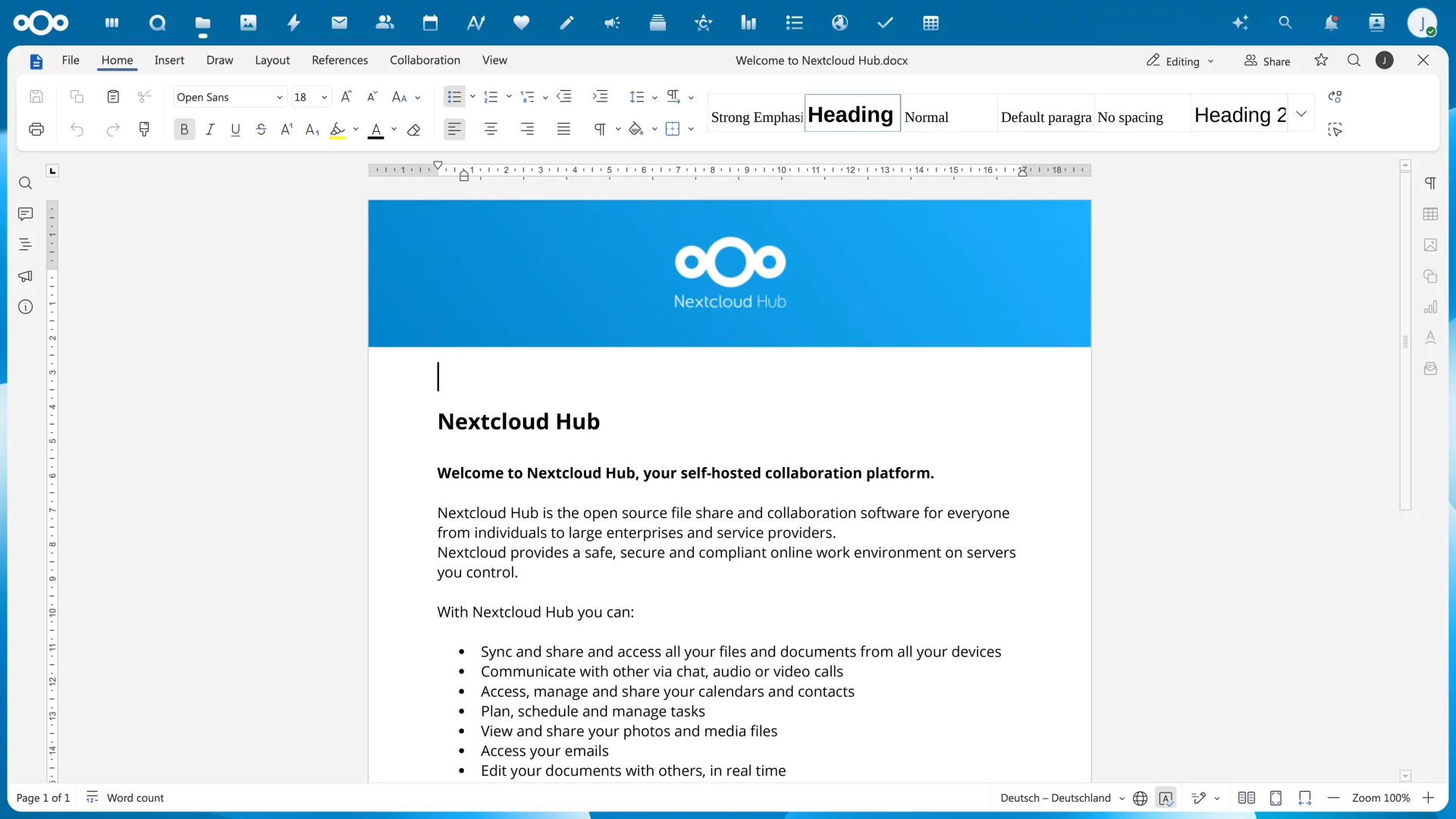
For now, users don’t need to worry. ONLYOFFICE has confirmed that its Nextcloud connector will continue to be supported and updated. If you’re currently using ONLYOFFICE within a Nextcloud setup, everything should keep working as usual.
Long-Term Outlook
The real shift could happen later in 2026. Euro-Office is expected to reach a stable release by summer and may eventually replace existing office integrations like Collabora in Nextcloud and IONOS offerings.
If Euro-Office delivers on its promises, it could become the default document editor in the Nextcloud ecosystem. That would significantly reduce ONLYOFFICE’s role—despite its current technical advantages.
A Strategic Shift in the Open-Source Ecosystem
This situation highlights a broader tension within the open-source world: the balance between collaboration and competition. Forking is a fundamental right in open-source software, but it can also strain relationships—especially when commercial interests and geopolitical factors are involved.
Ironically, Nextcloud is now using ONLYOFFICE’s own codebase to build a competing product. It’s a move that underscores both the power and the complexity of open-source licensing.
Final Thoughts
The ONLYOFFICE–Nextcloud split marks a turning point in the evolution of European digital sovereignty efforts. Euro-Office could become a major player if it succeeds—but it also raises important questions about trust, transparency, and the ethics of open-source collaboration.
For now, the ecosystem watches closely. Whether this fork leads to innovation or fragmentation remains to be seen—but one thing is certain: the landscape of online office suites is changing fast.
And if you'd like to go a step further in supporting us, you can treat us to a virtual coffee ☕️. Thank you for your support ❤️!

We do not support or promote any form of piracy, copyright infringement, or illegal use of software, video content, or digital resources.
Any mention of third-party sites, tools, or platforms is purely for informational purposes. It is the responsibility of each reader to comply with the laws in their country, as well as the terms of use of the services mentioned.
We strongly encourage the use of legal, open-source, or official solutions in a responsible manner.
Comments