


Have you ever tried learning Japanese… and quit a few weeks later?
You’re not alone.
Many learners start strong with apps like Duolingo or flashcards, only to realize that memorizing vocabulary lists in isolation doesn’t stick. Repeating random words without context can feel mechanical — and worse, ineffective.
The truth is, your brain remembers language far better when it encounters words in real-world context. And that’s exactly the idea behind Lingoku, a browser extension for Chrome, Edge, and Firefox that helps you learn Japanese passively while browsing the web.
Instead of forcing study sessions, Lingoku turns your everyday scrolling into a vocabulary-building experience.

What Is Lingoku?
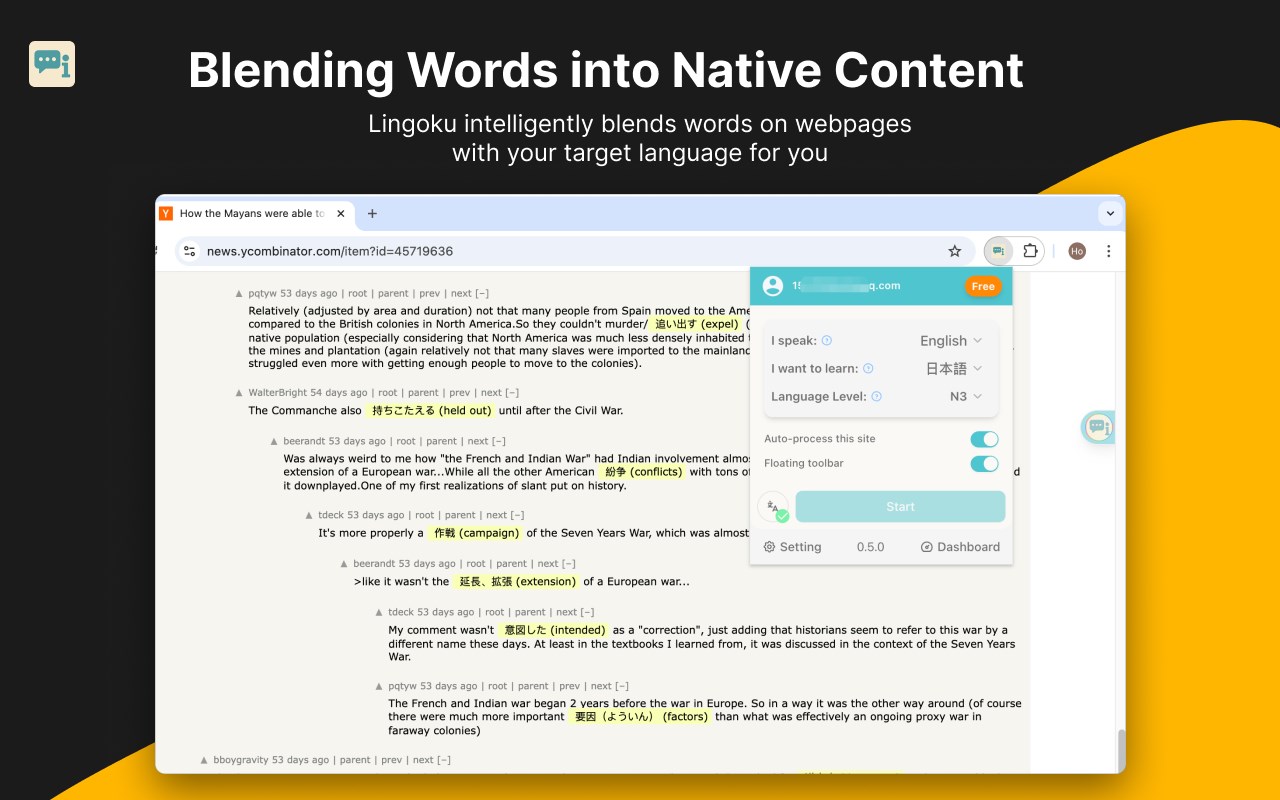
Lingoku is a Japanese learning browser extension that replaces a small percentage of words on web pages with their Japanese equivalents.
So while you’re:
- Reading the New York Times
- Scrolling Reddit
- Browsing blogs
- Researching online
—you’re quietly absorbing Japanese vocabulary in context.
Rather than presenting isolated flashcards, Lingoku integrates Japanese words naturally into the content you’re already reading.
Why Learning Japanese in Context Works
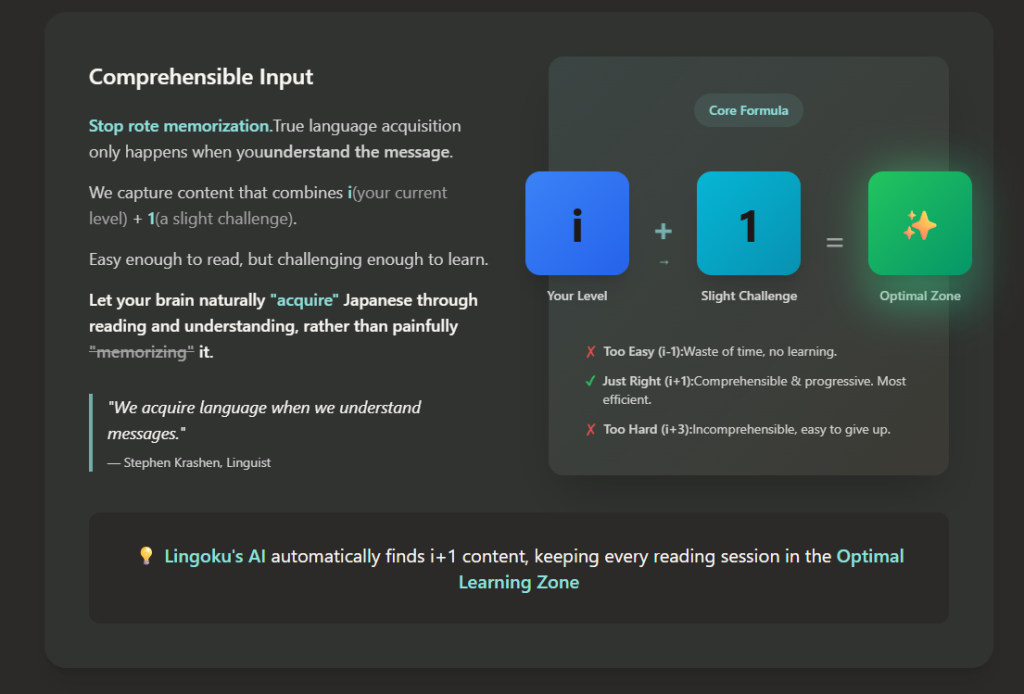
Lingoku is based on the i+1 language acquisition theory developed by linguist Stephen Krashen.
The concept is simple:
You learn best when exposed to material that is slightly above your current level — not so easy that it’s boring, and not so difficult that it’s overwhelming.
Lingoku analyzes your skill level and replaces only a limited portion of the text (around 10%) with appropriate Japanese vocabulary. That way:
- You can still understand the overall meaning.
- You don’t feel lost.
- You gradually expand your vocabulary naturally.
This contextual immersion method is far more effective than memorizing disconnected word lists.
Smart Hover Translations Powered by AI
One of the biggest challenges in learning Japanese is dealing with kanji.
A single kanji character can have multiple meanings depending on context. For beginners, this can be confusing — and frustrating.
Lingoku uses AI-powered contextual analysis to determine the correct meaning of words based on how they appear in the sentence.
When you hover over a Japanese word:
- The translation appears instantly (in about 0.2 seconds).
- There are no intrusive pop-ups.
- You don’t leave the page you’re reading.
This makes the learning experience seamless and non-disruptive.
Built-In Spaced Repetition System (SRS)
Learning vocabulary once isn’t enough. Without review, most new words are forgotten quickly.
Lingoku includes an integrated spaced repetition system (SRS) that reminds you to review words at optimal intervals — scientifically timed to improve long-term retention.
This feature helps reinforce vocabulary without requiring separate flashcard apps.
Perfect for JLPT Preparation
If you’re studying for the Japanese Language Proficiency Test (JLPT), Lingoku allows you to target vocabulary by exam level:
- JLPT N5
- JLPT N4
- JLPT N3
- JLPT N2
- JLPT N1
You can customize the extension to focus specifically on exam-relevant words, making it a practical companion to structured grammar study.

Easy Setup in Under a Minute
Getting started takes about 30 seconds:
- Install the extension (Chrome, Edge, or Firefox).
- Choose your learning goal:
- JLPT preparation
- Everyday Japanese
- Anime & manga vocabulary
- Set your current level.
- Start browsing as usual.
It works on most websites with readable text content.
No complicated configuration required.
Privacy and Data Protection
Since the extension analyzes web content, privacy matters.
According to its documentation:
- Page content is encrypted during AI analysis.
- Data is processed temporarily.
- Nothing is permanently stored.
This ensures your browsing activity isn’t retained or shared.
Free vs. Paid Version

Lingoku offers a free daily allowance of 500 points, which is typically enough for casual daily use.
The premium version unlocks:
- Advanced AI features
- Detailed learning progress reports
- Multi-device synchronization
- Expanded usage limits
For learners who want deeper analytics and unlimited immersion, the paid plan may be worthwhile.
Can Lingoku Replace Traditional Japanese Study?
No — and it doesn’t claim to.
Lingoku is not a substitute for:
- Grammar lessons
- Speaking practice
- Listening comprehension
- Structured coursework
However, it excels as a passive vocabulary reinforcement tool.
If you’ve ever dreamed of:
- Reading manga in Japanese
- Watching anime without subtitles
- Understanding Japanese tweets or forums
- Expanding vocabulary without forcing study sessions
— this extension can be a powerful supplement to your learning routine.
Final Thoughts: Learning Japanese Without Changing Your Routine
One of the biggest barriers to learning a new language is consistency.
Lingoku cleverly removes friction by embedding Japanese vocabulary directly into your daily web habits. Instead of scheduling extra study time, you learn while doing what you already do.
It’s not magic. It won’t make you fluent overnight. But as a contextual vocabulary tool, it aligns far better with how the brain actually acquires language.
If you’ve struggled with traditional apps and flashcards, turning your browser into a Japanese learning environment might be the smarter approach.
And if you'd like to go a step further in supporting us, you can treat us to a virtual coffee ☕️. Thank you for your support ❤️!

We do not support or promote any form of piracy, copyright infringement, or illegal use of software, video content, or digital resources.
Any mention of third-party sites, tools, or platforms is purely for informational purposes. It is the responsibility of each reader to comply with the laws in their country, as well as the terms of use of the services mentioned.
We strongly encourage the use of legal, open-source, or official solutions in a responsible manner.
Comments