

In the age of digital warfare, few intelligence organizations have shaped global cybersecurity as profoundly as Israel’s Unit 8200. Often compared to a compact, hyper-innovative version of the NSA, this secretive military unit has become a pipeline for world-class hackers, billion-dollar tech founders, and some of the most advanced cyber operations ever conducted. Yet its legacy is not only one of technological brilliance—it’s also deeply intertwined with complex ethical debates, modern warfare, and high-stakes geopolitical tensions.
This in-depth feature explores the true origins, capabilities, scandals, and long-lasting impact of Unit 8200—an organization that has influenced everything from Waze to Stuxnet, from global surveillance to cutting-edge AI targeting systems.
From Makeshift Shacks to Cyber Powerhouse: The Birth of Unit 8200
When Israel was founded in 1948, it quickly became clear that survival required more than tanks and fighter jets. The new nation was surrounded by hostile neighbors, borders shifted constantly, and the young state needed intelligence—fast, precise, and ahead of enemy plans.
The earliest form of what would become Unit 8200 appeared in 1952 as the Second Intelligence Service Unit, later known as Unit 515. Initially based in rundown shacks in Jaffa with salvaged equipment and a small team of mathematicians, it hardly resembled the elite cyber force it would become.
In 1954, the unit moved to Glilot, north of Tel Aviv. The now-iconic name “Unit 8200” would come later, more for internal organization than for branding—although today it is one of the most recognized intelligence designations in the world.
A Recruitment System Designed to Identify Exceptional Talent
Unlike larger countries, Israel cannot rely on sheer manpower. Instead, it identifies exceptional minds early—very early.
Teenagers who excel in math, programming, logic, or cryptography are funneled into specialized pre-military programs such as:
- Magshimim – an extracurricular cybersecurity track
- Mamram – an elite programming and software development course
- Talpiot – a prestigious academic-military program for top scientific talent
At just 16, candidates receive letters inviting them to take extensive exams blending mathematics, coding, cryptography, and psychological evaluation. Those who excel enter highly selective training pipelines.
By age 18, when most Israelis are assigned to infantry or armored units, these students join Unit 8200—one of the most demanding and intellectually intense environments in the country.
A Startup Culture Inside a Military Base
Despite being part of the Israeli Defense Forces (IDF), Unit 8200 functions more like a startup than a traditional military unit.
The culture emphasizes:
- flat hierarchies, where a 19-year-old can challenge a colonel
- rapid iteration, mirroring Silicon Valley product cycles
- freedom to experiment, even if that means failing fast
- collaborative problem-solving, not rigid command-and-control structures
It is not uncommon for a lower-ranked soldier to propose an idea that ends up influencing national strategy.
The service commitment typically lasts three years, during which members receive training no university in the world can replicate—real-time intelligence, advanced cryptography, signals interception, offensive cyber tools, and operational decision-making with life-or-death consequences.
A Global SIGINT Network: From the Negev Desert to Airborne Platforms
One of Unit 8200’s crown jewels is the Urim listening station, located in the Negev Desert near Beer-Sheva. Widely believed to be one of the largest signals intelligence sites on Earth, Urim intercepts vast amounts of communications traffic from the Middle East and beyond.
Additional capabilities include:
- electronic intelligence posts abroad, including alleged assets in embassies
- direct taps into communications backbones
- airborne SIGINT platforms, including the Gulfstream G550 (Nachshon Shavit/Eitam) operated by the Israeli Air Force
Together, these systems allow Israel to conduct SIGINT, ELINT, and cyber operations across a broad region.
A British military analyst once described Unit 8200 as “one of the best technical intelligence agencies in the world—comparable to the NSA, just smaller.”
Why Intelligence Matters: Survival as a National Imperative
For Israel, intelligence is not theoretical—it is existential.
Each intercepted phone call, decrypted message, or compromised network can prevent an attack or expose a threat.
This urgency fuels the unit’s intensity, innovation, and relentless demand for precision.
The Operation That Redefined Cyberwarfare: Stuxnet

No mission has shaped Unit 8200’s reputation as dramatically as Stuxnet, the malware that sabotaged Iran’s nuclear program at Natanz.
Beginning in the mid-2000s, Iran advanced its uranium-enrichment efforts. Traditional military options were risky and potentially catastrophic. A new strategy emerged: disrupt the program from the inside.
The operation—commonly linked to a joint effort between Unit 8200 and the NSA (though never confirmed officially)—produced one of the most sophisticated cyberweapons ever deployed.
What made Stuxnet revolutionary?
- It targeted Siemens S7-300 industrial controllers.
- It physically manipulated IR-1 centrifuges by oscillating rotor speeds.
- It fed operators fake telemetry, hiding the sabotage.
- It spread quietly through USB drives and Windows systems.
The result: roughly 1,000 centrifuges were damaged, delaying Iran’s nuclear progress for years.
The operation remained covert until a programming error caused the worm to spread globally in 2010, revealing its existence to cybersecurity researchers.
Not Just Stuxnet: Advanced Espionage Tools
Stuxnet has relatives.
Malware families such as Duqu and Flame—discovered in the early 2010s—displayed unparalleled sophistication in:
- screen captures
- audio recordings
- document exfiltration
- stealth communications
Attribution varies, but many analysts believe these tools came from the same ecosystem of intelligence cooperation between the US and Israel.
Ethical Storms: Surveillance, Targeting, and Civilian Impact
Unit 8200’s success also brings heavy controversy.
2014: The “Letter of the 43”
Forty-three veterans published a public letter accusing the unit of conducting intrusive surveillance on Palestinians, including gathering sensitive personal information that could be used for leverage.
The Israeli government denied the allegations, and other veterans defended the unit, emphasizing strict ethical standards. The debate remains unresolved.
2017: Airline Bomb Plot Foiled
Israeli and Australian officials claimed intelligence from the unit helped stop a plot targeting an Etihad flight, demonstrating the life-saving potential of SIGINT.
2023–2024: AI Targeting Systems
Investigations revealed the existence of a targeting algorithm known as “Lavender”, allegedly used to identify Hamas operatives in Gaza. Israel denies that autonomous systems select targets, stating that humans make decisions.
Nevertheless, the immense civilian death toll—over 61,000 Palestinians reported killed by the UN, most of them civilians—raises ongoing global concerns about the ethics and limits of AI-assisted warfare.
From Cyber Soldiers to Tech Titans: The Startup Nation Pipeline
One of Unit 8200’s most remarkable legacies is its impact on global tech entrepreneurship. Veterans routinely transition into major cybersecurity firms and Silicon Valley-level startups.
Companies founded or influenced by former members include:
- Check Point
- Palo Alto Networks
- Waze
- CyberArk
- Imperva
- NSO Group
Venture networks like Team8, founded by former 8200 commanders, incubate new startups and connect alumni into one of the world’s most influential tech ecosystems. Israel now represents roughly 10% of the global cybersecurity market.
But not all stories are triumphs.
The Pegasus Scandal: When Defensive Tools Turn Offensive
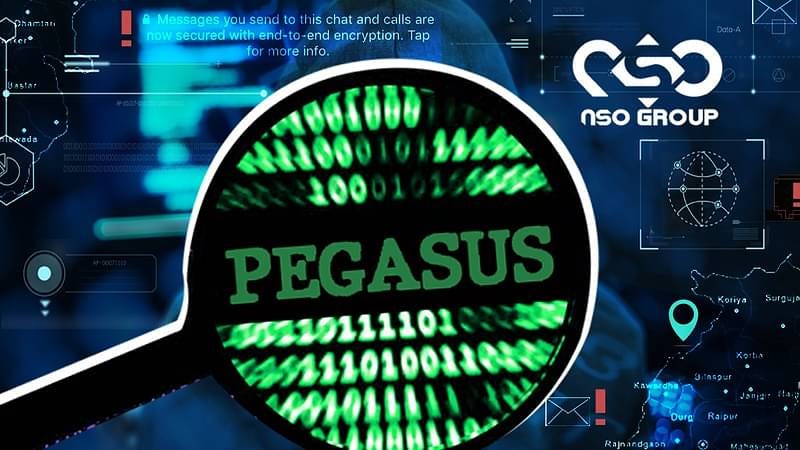
NSO Group’s spyware Pegasus, developed by 8200 veterans, became one of the most feared digital weapons on Earth. Officially licensed for use against terrorism and criminal networks, Pegasus was later found on the devices of:
- journalists
- activists
- political opponents
- even heads of state
The scandal triggered worldwide investigations, sanctions, lawsuits, and a deeper debate on how intelligence-grade tools should be regulated—or if they should exist at all.
A Force That Defines—and Challenges—the Future of Cyberwarfare
Unit 8200 stands at the intersection of innovation, national security, entrepreneurship, and profound ethical dilemmas. Its contributions are undeniable: groundbreaking cyber capabilities, real-world intelligence victories, and a tech ecosystem envied worldwide.
But its operations also raise critical questions about:
- privacy vs. security
- AI and autonomy in warfare
- accountability for civilian casualties
- the limits of state surveillance
As emerging technologies such as quantum computing, neurotech, and generative AI reshape conflict, Unit 8200 will play a central role—admired by some, criticized by others, and impossible to ignore.
Conclusion
Whether you’re navigating traffic with Waze, securing your network with a next-generation firewall, or reading about a sophisticated cyberattack in the news, the fingerprints of Unit 8200 are never far away. Its influence spans national defense, global technology, and the modern ethics of digital warfare.
But behind every algorithm and intercept lies a real human impact—lives saved, lives lost, and a future shaped by decisions made in rooms the world rarely sees. Understanding Unit 8200 means understanding not just cybersecurity but the complex moral terrain of the digital age.
At the time of writing, more than 69,756 Palestinians have been killed in Gaza, according to the UN (November 2025), the majority of them civilians. The technologies described here are currently being used in a conflict that is subject to genocide accusations before the International Court of Justice and war crimes proceedings at the International Criminal Court.”
Sources: Articles & Reports on Unit 8200
| Title | Date / Author / Source | Why It’s Important / What It Covers |
|---|---|---|
| “Trend analysis: The Israeli Unit 8200 – An OSINT‑based study” | 2019 Center for Security Studies | Academic OSINT‑based study outlining the origins, structure, evolution and capacities of Unit 8200. Traces how the unit formed from precursor intelligence groups, evolved through wars (esp. after 1973), and became a broad SIGINT/cyber‑intelligence organization. Useful for historical context and technical scope. |
| “Israeli Unit 8200 and its Role in Serving Israeli Espionage Technology” | 2019 (Fatima Itani) AL-Zaytouna Centre | A research paper (in Arabic) analyzing the unit’s development and its broader role in Israel’s espionage infrastructure. Provides perspective on how cyber‑surveillance capabilities serve state and international strategic aims. |
| “Israeli Cyberpower: The Unfinished Development of the Cyber Dimension of Israel’s Military” | 2020 ifri.org | A policy‑oriented report analyzing how Unit 8200 fits into Israel’s overall “cyber‑power” strategy. Looks not only at technical capabilities but also at how the intelligence‑cyber ecosystem interacts with economic, political, and military dimensions. Useful to understand Unit 8200’s place in Israel’s broader security and strategic architecture. |
| “Unit 8200: Israel’s Elite Cyber Intelligence Unit” | n.d. (public sources) Wikipédie+1 | Concise but informative overview of the unit: its foundation (1952), role (SIGINT, cyberwarfare), relationship with IDF, and its pipeline into Israel’s tech sector. Good as a baseline / quick reference. |
| “Israeli intelligence veterans refuse to serve in Palestinian territories” | 12 September 2014 The Guardian | A landmark article documenting a public letter by 43 ex‑members of Unit 8200 rejecting further service in operations involving Palestinians — a rare open critique from within Israeli intelligence ranks. Essential read for understanding internal dissent, ethical objections, and the human‑rights dimension. |
| “Wiretaps against Palestinians are wrong, Israeli ex‑spies tell Netanyahu” | 12 September 2014 Reuters | Short but powerful — reports on the same 2014 “refusal letter,” emphasizing how ex‑Unit 8200 reservists condemned “all‑encompassing surveillance” on civilians and its role in enabling strikes that risk civilian lives. Good to pair with the Guardian piece for multiple perspectives. |
| “Surveillance of Palestinians and the Fight for Digital Rights” | 2020 al-shabaka.org | A civil‑society / rights‑oriented analysis discussing the legal and ethical implications of mass surveillance practices—contextualizes Unit 8200’s practices within broader debates on privacy, law, and human rights. Helpful for law, policy, and human‑rights research. |
| “What is Israel’s secretive cyber warfare Unit 8200?” | 18 September 2024 Reuters | Up‑to‑date mainstream media summary of Unit 8200: its size, scope, alleged operations (SIGINT, cyberattacks, sabotage), recruitment methods, and recent controversies (e.g. intelligence failure, ethical scrutiny). Good starting point for current events context. |
| “Revealed: Israeli military creating ChatGPT‑like tool using vast collection of Palestinian surveillance data” | 6 March 2025 The Guardian+1 | Groundbreaking 2025 investigative piece revealing that Unit 8200 used intercepted communications (phone calls, texts) from Palestinians to train a large‑language model (LLM). Crucial to understanding the unit’s shift into AI‑driven surveillance and data analysis — and the associated ethical debates. |
| “Microsoft blocks Israel’s use of its technology in mass surveillance of Palestinians” | 25 September 2025 The Guardian+1 | Major corporate‑ethics and geopolitical story: after the 2025 Guardian exposé, big tech firm Microsoft revoked access of Unit 8200 to its cloud and AI services. Highlights consequences of surveillance revelations and the interplay of tech corporations, intelligence operations, and global law/regulation. |
And if you'd like to go a step further in supporting us, you can treat us to a virtual coffee ☕️. Thank you for your support ❤️!

We do not support or promote any form of piracy, copyright infringement, or illegal use of software, video content, or digital resources.
Any mention of third-party sites, tools, or platforms is purely for informational purposes. It is the responsibility of each reader to comply with the laws in their country, as well as the terms of use of the services mentioned.
We strongly encourage the use of legal, open-source, or official solutions in a responsible manner.
Comments