


When people talk about operating systems, the conversation almost always revolves around Windows, macOS, or Linux. Occasionally, someone might mention FreeBSD or Solaris. Yet beyond these mainstream platforms lies a fascinating ecosystem of alternative operating systems—fully independent, actively developed, and surprisingly innovative.
To be clear, these are not Linux distributions. Each project below is a standalone operating system, built from the ground up, running on x86 or PowerPC architectures, and designed to compete conceptually with Windows or Linux. Some prioritize performance, others security, education, or nostalgia—but all of them push computing in unique directions.
Here are some of the most promising and unusual operating systems you probably haven’t tried—yet.
AmigaOS 4.1 – A Computing Legend That Refuses to Die

If the name Amiga rings a bell, you’re not alone. The Amiga platform is a true veteran of personal computing, and remarkably, it’s still evolving.
Developed by Hyperion Entertainment, AmigaOS 4.1 Final Edition Update 3 was released in October 2025, delivering over 60 new features and 135 bug fixes. The OS runs on specialized PowerPC hardware, primarily systems sold by ACube, with a new batch of A1222+ motherboards on the roadmap.
Unlike most modern alternatives, AmigaOS is proprietary, not open source. Still, its loyal community and continuous updates prove that classic platforms can remain relevant decades later.
Haiku – The Modern Revival of BeOS

Haiku is an open-source operating system inspired by BeOS, designed for speed, simplicity, and responsiveness. Originally known as OpenBeOS, the project was renamed Haiku in 2004 and has steadily matured ever since.
The release of Haiku R1 Beta 5 in September 2024 was a major milestone. It introduced a completely reworked TCP/IP stack delivering 8–10× faster network performance, a new TUN/TAP driver for VPN support, and dozens of new software ports—including .NET, GIMP, and Inkscape.
The project is also financially healthy, with record-breaking donations in 2024, highlighting strong community support and long-term sustainability.
ReactOS – Running Windows Apps Without Windows

ReactOS is one of the most ambitious OS projects ever attempted. Its goal is simple to explain but extremely hard to achieve: binary compatibility with Microsoft Windows applications and drivers.
Started in 1998, ReactOS is developed from scratch and heavily leverages Wine to run Windows software. The release of version 0.4.15 in March 2025 introduced a rewritten kernel memory manager, significantly improved SMP (multi-core) support, and better compatibility with modern Windows installers.
Although ReactOS remains in alpha, progress is steady. It’s open source, runs on x86 hardware, and continues to close the gap with legacy Windows environments.
MorphOS – A Lightweight OS for Creative Minds


MorphOS is a sleek, efficient operating system designed exclusively for PowerPC architectures. Strongly inspired by AmigaOS, it focuses on speed, elegance, and creative workflows.
One standout feature is its built-in Amiga emulator, allowing users to run legacy Amiga applications seamlessly. MorphOS 3.19, released in January 2025, added support for the QUIC protocol (HTTP/3) and introduced an updated Wayfarer browser based on WebKitGTK 2.50.0.
Even SDL was upgraded to version 3, making MorphOS more appealing for multimedia and retro-style development. It runs on Pegasos, Amiga, and EFIKA systems.
AROS – The Open-Source Amiga-Compatible OS Goes 64-Bit

AROS (AROS Research Operating System) began in 1995 as an open-source attempt to recreate AmigaOS compatibility—and it’s still going strong.
In 2025, the project reached a major milestone with AROS One v1.0, the first complete 64-bit AROS distribution. The Odyssey web browser was updated with a newer WebKit engine (2019), restoring compatibility with modern websites like YouTube. Meanwhile, a GCC 15 port is currently in progress.
AROS runs on x86 and PowerPC, includes an Amiga application emulator, and remains fully open source, making it one of the most flexible Amiga-inspired platforms available today.
MenuetOS – A Full OS Written Entirely in Assembly

Also known as MeOS, MenuetOS is a technical curiosity—and an impressive one. The entire operating system is written in assembly language, resulting in an incredibly small and fast footprint.
MenuetOS fits on a 1.44 MB floppy disk, includes its own GUI and networking stack, and now even boots via UEFI. The latest version, 1.58.00, introduced an improved X server, better network performance, and classic X utilities like XEyes and XCalc.
The 32-bit version is open source, while the 64-bit edition is free for personal use, though its source code is closed.
KolibriOS – Instant Boot, Minimal Resources, Maximum Speed

In 2004, developers forked MenuetOS to create KolibriOS, another operating system written entirely in FASM assembly and small enough to fit on a floppy disk.
KolibriOS boots in seconds, launches applications instantly, and requires as little as 12 MB of RAM. Despite its tiny size, it includes over 250 built-in applications, ranging from text editors and music players to a graphical web browser.
In 2024, the project participated in Google Summer of Code, adding NVMe SSD support and SDL2 compatibility, significantly expanding its hardware and software ecosystem.
SerenityOS – A Love Letter to 1990s Computing

SerenityOS is a modern, Unix-like operating system designed with the look and feel of 1990s desktops, but built using contemporary engineering principles.
Everything in SerenityOS is developed from scratch: the kernel, C library, file system, GUI toolkit, and even its own applications. The project also gave birth to the Ladybird browser, which became an independent project in 2024.
In early 2025, SerenityOS successfully ran on a real Dell Chromebook, proving it’s more than just a hobby OS. There are no official releases—you build it yourself—but it’s one of the most educational and inspiring OS projects available today.
Redox OS – A Secure Unix-Like OS Built in Rust
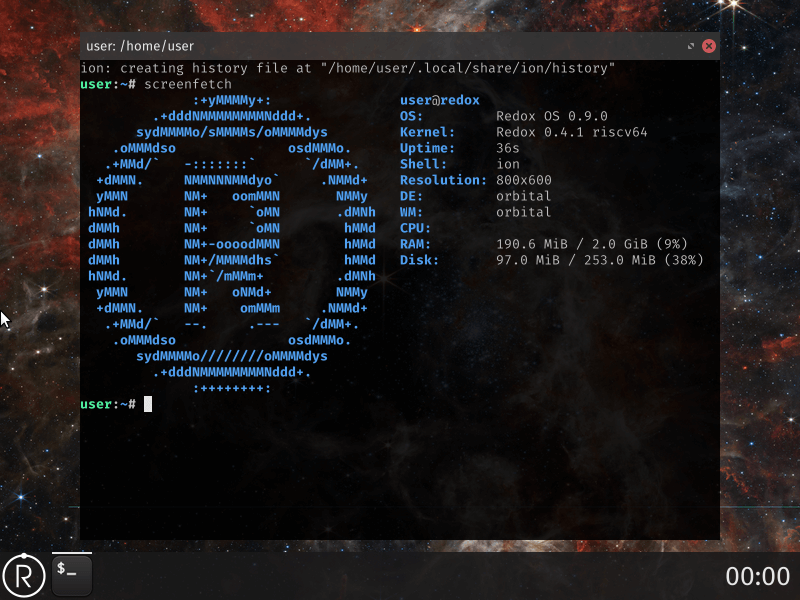
If you’re interested in security-first operating systems, Redox OS deserves attention. Built entirely in Rust, Redox uses a microkernel architecture to maximize safety and reliability.
Celebrating its 10th anniversary, Redox made huge strides in 2025, including 500–700% faster I/O performance, fully enabled multi-threading by default, and successful ports of Servo and WebKitGTK browser engines.
Even Andrew Tanenbaum, creator of MINIX, praised Redox, stating it has “real potential.” It currently supports x86 (32/64-bit), with ARM64 support on the way.
Visopsys – A One-Person OS Project Since 1997

Closing the list is Visopsys (Visual Operating System)—an impressive example of what a single developer can achieve. Started in 1997, Visopsys is small, fast, and fully open source.
The latest release, version 0.92 (September 2023), includes a functional graphical interface, preemptive multitasking, and support for FAT, ext2/ext3, and ISO9660 file systems.
It’s a solid, stable hobbyist OS that demonstrates long-term dedication and thoughtful design.
Final Thoughts:
These operating systems may never replace Windows or macOS, but that’s not the point. They represent experimentation, innovation, and freedom in computing—often exploring ideas mainstream platforms avoid.
If you’re curious, adventurous, or simply tired of bloated software ecosystems, installing one of these OSes (even in a virtual machine) can be incredibly rewarding. They’re also excellent choices for educational use or child-friendly PCs, offering a safer environment with fewer viruses and distractions.
Sometimes, the future of computing hides in the places few people bother to look.
And if you'd like to go a step further in supporting us, you can treat us to a virtual coffee ☕️. Thank you for your support ❤️!

We do not support or promote any form of piracy, copyright infringement, or illegal use of software, video content, or digital resources.
Any mention of third-party sites, tools, or platforms is purely for informational purposes. It is the responsibility of each reader to comply with the laws in their country, as well as the terms of use of the services mentioned.
We strongly encourage the use of legal, open-source, or official solutions in a responsible manner.
Comments