

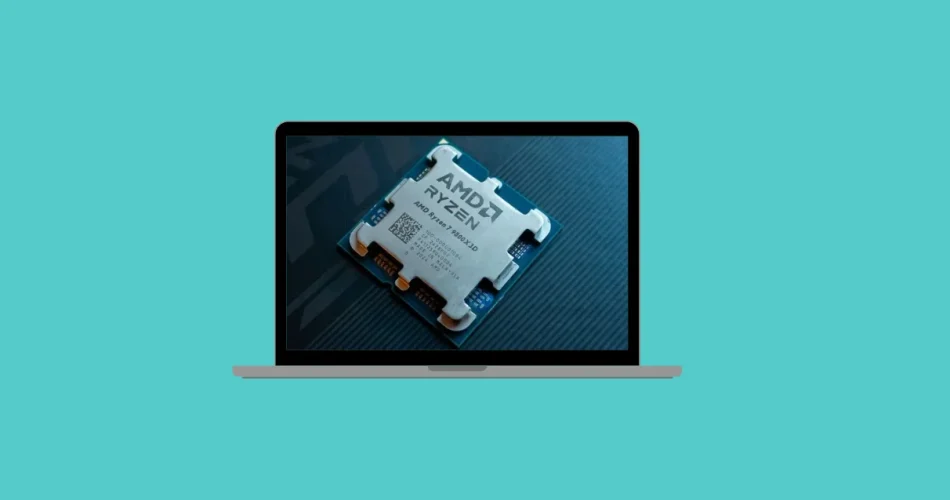
The gaming CPU market is finally exciting again. After several years of incremental gains, AMD’s Ryzen 7 9800X3D arrives with a clear mission: reclaim absolute gaming dominance — and this time without sacrificing productivity performance.
With its Zen 5 architecture, second-generation 3D V-Cache, higher clocks, and unlocked overclocking, the 9800X3D is not just a refresh — it’s AMD’s most refined gaming processor yet. But does it justify its premium price? And is it a worthwhile upgrade over the legendary 7800X3D?
Let’s find out.
Overview: What Is the Ryzen 7 9800X3D?
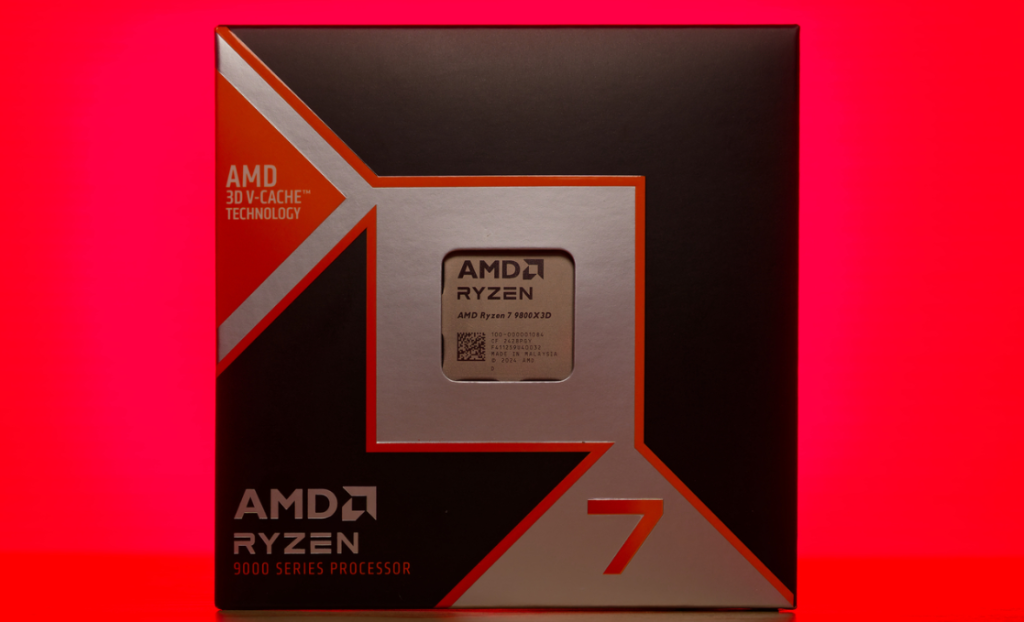
The Ryzen 7 9800X3D is AMD’s flagship gaming-focused CPU in the Ryzen 9000 family.
Key specs:
- 8 Zen 5 cores / 16 threads
- Boost clock up to 5.2 GHz
- 96 MB of L3 cache via 3D V-Cache
- 4 nm manufacturing process
- 120 W TDP
- Overclocking enabled (new for X3D)
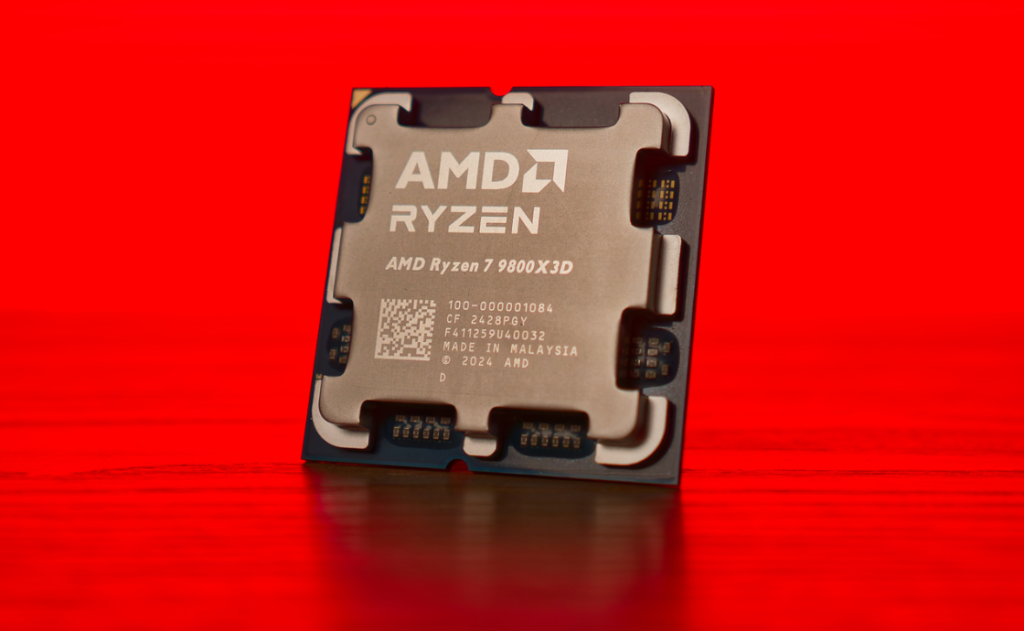
It replaces the Ryzen 7 7800X3D, keeping the same core count but introducing architectural improvements, higher clocks, and a redesigned cache layout that improves thermal behavior.
Unlike previous X3D chips, AMD now allows manual overclocking — a huge change for enthusiasts.
Affiliate Disclosure: This post may contain affiliate links. If you purchase through these links, we may earn a commission at no additional cost to you. As an Amazon Associate, we earn from qualifying purchases.
 Buy AMD Ryzen 7 9800X3D Processor on Amazon ($469)
Why 3D V-Cache Still Matters for Gaming
Modern games are extremely sensitive to memory latency. When the CPU has to constantly fetch data from system RAM, performance suffers — especially in simulation, MMO, strategy, and esports titles.
AMD’s solution is 3D V-Cache: stacking a large block of L3 cache directly on the processor, allowing the CPU to access far more data instantly.
With 96 MB of L3 cache, the Ryzen 7 9800X3D minimizes memory bottlenecks and delivers:
- Higher average frame rates
- Better 1% and 0.1% lows
- More stable performance in CPU-heavy games
This makes it especially effective in titles like Microsoft Flight Simulator, World of Warcraft, Starfield, Factorio, and competitive shooters at high refresh rates.
Second-Generation 3D V-Cache: What Changed?
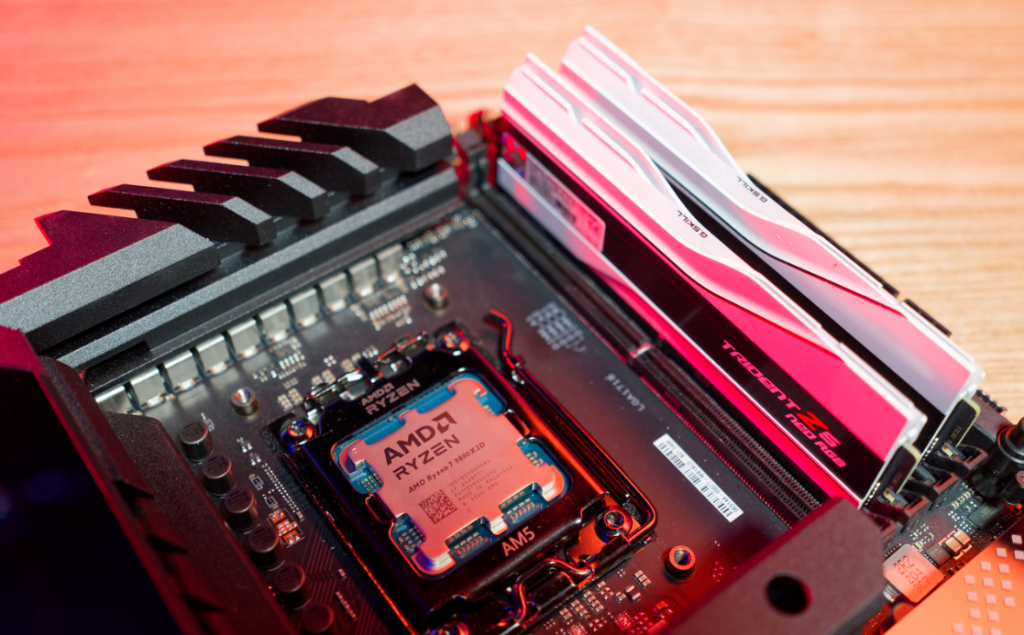
On earlier X3D CPUs, the cache was stacked on top of the compute die, limiting heat dissipation and forcing AMD to lock overclocking and reduce clock speeds.
With Ryzen 9000 X3D, AMD moved the cache underneath the compute die. This improves thermal transfer and allows:
- Higher sustained clock speeds
- Higher thermal limits (up to 95°C)
- Manual overclocking support
- Better performance in non-gaming workloads
In other words, the 9800X3D is no longer a “gaming-only” CPU — it’s now a legitimate all-rounder.
Performance

Productivity Performance
Compared to the previous generation, the Ryzen 7 9800X3D delivers a significant uplift in creative workloads like rendering, encoding, and compilation.
It now sits comfortably between the Ryzen 7 9700X and Ryzen 9 9900X in productivity, making it far more versatile than earlier X3D models.
This means gamers who also edit video, stream, or work with creative software no longer have to compromise.
| Rank | CPU Model | Performance Score |
|---|---|---|
| 1 | AMD Ryzen 9 9950X | 227 |
| 2 | Intel Core Ultra 9 285K | 226 |
| 3 | Intel Core i9-14900K | 205 |
| 4 | Intel Core i9-13900KS | 199 |
| 5 | Intel Core Ultra 7 265K | 199 |
| 6 | AMD Ryzen 9 7950X EXPO | 197 |
| 7 | AMD Ryzen 9 9900X | 196 |
| 8 | AMD Ryzen 9 7950X | 193 |
| 9 | Intel Core i9-13900K 200W | 193 |
| 10 | AMD Ryzen 9 7950X Eco | 189 |
| 11 | Intel Core i7-14700K | 186 |
| 12 | Intel Core i9-13900K 105W | 168 |
| 13 | Intel Core Ultra 5 245K | 166 |
| 14 | AMD Ryzen 7 9800X3D | 166 |
| 15 | Intel Core i7-13700K | 163 |
| 16 | AMD Ryzen 9 7900X | 162 |
| 17 | Intel Core i9-12900K | 156 |
| 18 | AMD Ryzen 7 9700X | 146 |
| 19 | Intel Core i5-14600K | 145 |
| 20 | Intel Core i5-13600K | 145 |
| 21 | AMD Ryzen 9 5950X | 140 |
| 22 | Intel Core i7-12700K | 135 |
| 23 | AMD Ryzen 7 7700X | 130 |
| 24 | AMD Ryzen 7 7700X Eco | 128 |
| 25 | AMD Ryzen 7 7800X3D | 126 |
| 26 | AMD Ryzen 5 9600X | 126 |
| 27 | AMD Ryzen 9 5900X | 122 |
| 28 | Intel Core i5-12600K | 115 |
| 29 | AMD Ryzen 5 7600X | 114 |
| 30 | AMD Ryzen 7 5800X | 100 |
| 31 | Intel Core i7-12700 | 96 |
| 32 | Intel Core i9-11900K | 94 |
| 33 | Intel Core i7-11700K | 92 |
| 34 | Intel Core i5-12400 | 91 |
| 35 | Intel Core i5-12500 | 90 |
| 36 | AMD Ryzen 5 5700G | 89 |
| 37 | AMD Ryzen 5 5600X | 84 |
| 38 | Intel Core i5-11600K | 80 |
| 39 | AMD Ryzen 5 5600G | 76 |
Gaming Performance
This is where the 9800X3D truly shines.
It outperforms every current Intel and AMD CPU in gaming, often by double-digit margins in CPU-limited scenarios.
Compared to:
- Ryzen 7 9700X → significantly faster in gaming due to cache advantage
- Ryzen 7 7800X3D → modest but consistent improvement
- Intel Core i9-14900K → much faster in CPU-bound games with far lower power draw
- Intel Core Ultra 200 series → dramatically better gaming results at a lower price
It is currently the fastest gaming processor money can buy.
| Rank | CPU Model | Performance Score |
|---|---|---|
| 1 | AMD Ryzen 7 9800X3D | 164 |
| 2 | AMD Ryzen 7 7800X3D | 151 |
| 3 | AMD Ryzen 9 9950X | 136 |
| 4 | AMD Ryzen 9 9900X | 134 |
| 5 | AMD Ryzen 5 9700X | 130 |
| 6 | Intel Core i9-13900K 200W | 129 |
| 7 | AMD Ryzen 5 9600X | 128 |
| 8 | AMD Ryzen 9 7950X EXPO | 127 |
| 9 | Intel Core i9-14900K | 127 |
| 10 | Intel Core i7-13700K | 125 |
| 11 | Intel Core i9-13900K | 124 |
| 12 | Intel Core i9-13900K 105W | 124 |
| 13 | AMD Ryzen 7 7700X Eco | 123 |
| 14 | AMD Ryzen 9 7950X Eco | 123 |
| 15 | AMD Ryzen 7 7700X | 122 |
| 16 | AMD Ryzen 9 7950X | 122 |
| 17 | Intel Core i7-14700K | 122 |
| 18 | AMD Ryzen 9 7900X | 120 |
| 19 | Intel Core Ultra 9 285K | 119 |
| 20 | Intel Core i5-14600K | 119 |
| 21 | Intel Core i5-13600K | 118 |
| 22 | AMD Ryzen 5 7600X | 118 |
| 23 | Intel Core i7-12700K | 117 |
| 24 | Intel Core Ultra 7 265K | 116 |
| 25 | Intel Core i9-12900K | 116 |
| 26 | Intel Core i5-12600K | 109 |
| 27 | Intel Core Ultra 5 245K | 107 |
| 28 | AMD Ryzen 9 5900X | 106 |
| 29 | Intel Core i5-12500 | 105 |
| 30 | AMD Ryzen 9 5950X | 104 |
| 31 | Intel Core i7-12700 | 104 |
| 32 | AMD Ryzen 5 5600X | 102 |
| 33 | Intel Core i7-11700K | 101 |
| 34 | Intel Core i5-12400 | 100 |
| 35 | AMD Ryzen 7 5800X | 100 |
| 36 | Intel Core i9-11900K | 98 |
| 37 | Intel Core i5-11600K | 98 |
| 38 | AMD Ryzen 7 5700G | 89 |
| 39 | AMD Ryzen 5 5600G | 85 |
Power Consumption & Thermals
Power usage is higher than the 7800X3D, mainly due to higher clocks and relaxed thermal limits. However, efficiency remains excellent compared to Intel’s high-end offerings.
- Higher peak power under heavy workloads
- Still significantly more efficient than Core i9 and Core Ultra flagships
- Much better thermals thanks to the redesigned cache layout
With a decent AIO or high-end air cooler, temperatures stay well under control even in long gaming sessions.
| Rank | CPU Model | Idle (W) | Blender (W) |
|---|---|---|---|
| 1 | AMD Ryzen 5 5600G | 64 | 139 |
| 2 | AMD Ryzen 7 5700G | 63 | 161 |
| 3 | Intel Core i5-12400 | 73 | 165 |
| 4 | Intel Core i5-13500 | 79 | 166 |
| 5 | Intel Core i7-12700 | 76 | 166 |
| 6 | AMD Ryzen 5 5600X | 80 | 167 |
| 7 | AMD Ryzen 7 7800X3D | 101 | 177 |
| 8 | AMD Ryzen 7 9700X | 100 | 203 |
| 9 | AMD Ryzen 5 9600X | 100 | 201 |
| 10 | AMD Ryzen 7 7700X Eco | 71 | 208 |
| 11 | AMD Ryzen 5 7600X | 71 | 223 |
| 12 | AMD Ryzen 7 5800X | 85 | 232 |
| 13 | Intel Core Ultra 5 245K | 94 | 235 |
| 14 | AMD Ryzen 9 5900X | 82 | 245 |
| 15 | AMD Ryzen 9 9800X3D | 101 | 247 |
| 16 | AMD Ryzen 7 7700X | 71 | 255 |
| 17 | AMD Ryzen 9 5950X | 90 | 260 |
| 18 | Intel Core i5-13600K | 84 | 279 |
| 19 | AMD Ryzen 9 7950X Eco | 73 | 282 |
| 20 | Intel Core i5-11600K | 81 | 286 |
| 21 | Intel Core i7-11700K | 77 | 300 |
| 22 | AMD Ryzen 9 9900X | 101 | 308 |
| 23 | Intel Core i9-11900K | 76 | 310 |
| 24 | Intel Core i5-14600K | 84 | 315 |
| 25 | Intel Core Ultra 7 265K | 94 | 318 |
| 26 | Intel Core i9-13900K 105W | 84 | 319 |
| 27 | Intel Core i7-12700K | 85 | 320 |
| 28 | Intel Core i5-12600K | 85 | 320 |
| 29 | AMD Ryzen 9 9950X | 101 | 321 |
| 30 | Intel Core i9-13900K 200W | 84 | 362 |
| 31 | Intel Core i9-13900C | 84 | 363 |
| 32 | AMD Ryzen 9 7950X EXPO | 73 | 369 |
| 33 | AMD Ryzen 9 7950X | 73 | 369 |
| 34 | Intel Core Ultra 9 285K | 94 | 370 |
| 35 | Intel Core i7-13700K | 84 | 375 |
| 36 | Intel Core i9-12900K | 86 | 391 |
| 37 | Intel Core i7-14700K | 88 | 428 |
| 38 | Intel Core i9-13900K | 84 | 429 |
| 39 | Intel Core i9-14900K | 86 | 430 |
Pros and Cons
Pros
- Best gaming performance available
- Much stronger productivity performance than older X3D chips
- Excellent thermal behavior
- Overclocking is finally supported
- Efficient compared to competing high-end CPUs
Cons
- More expensive than mainstream CPUs
- Gaming gains over 7800X3D are moderate
- Power consumption is higher than previous X3D models
Final Verdict
The Ryzen 7 9800X3D is not just the best gaming CPU of 2025 — it is the most complete gaming processor AMD has ever built.
It finally removes the traditional X3D weaknesses by improving clocks, thermals, and productivity performance, while keeping its unrivaled gaming advantage. Yes, it consumes more power than its predecessor, and yes, it carries a premium price — but it also delivers unmatched frame rates, better versatility, and a more future-proof platform.
If you want the absolute best gaming experience today — with no compromises — the Ryzen 7 9800X3D is the CPU to buy.
Affiliate Disclosure: This post may contain affiliate links. If you purchase through these links, we may earn a commission at no additional cost to you. As an Amazon Associate, we earn from qualifying purchases.
Buy AMD Ryzen 7 9800X3D Processor on Amazon ($469)
And if you'd like to go a step further in supporting us, you can treat us to a virtual coffee ☕️. Thank you for your support ❤️!

We do not support or promote any form of piracy, copyright infringement, or illegal use of software, video content, or digital resources.
Any mention of third-party sites, tools, or platforms is purely for informational purposes. It is the responsibility of each reader to comply with the laws in their country, as well as the terms of use of the services mentioned.
We strongly encourage the use of legal, open-source, or official solutions in a responsible manner.
Comments